


What's Happening?
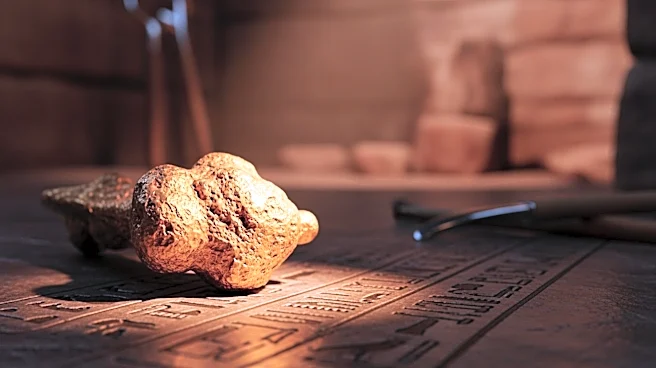
Egyptian authorities have unveiled a significant artifact from King Tutankhamun's tomb and two restored tombs from the New Kingdom era in Luxor. The artifact, a plaster blocking wall, was originally used to seal the entrance of Tutankhamun's burial chamber
and is now on display at the Luxor Museum. This wall is unique as it bears seals from Tutankhamun and necropolis guards, reflecting funerary rituals and administrative authority. The two newly restored tombs belong to Rabuya and his son Samut, who served as door keepers of the deity Amun during the 18th Dynasty. These tombs, discovered in 2015, contain scenes depicting daily life and funerary rituals, including agriculture and crafts.
Why It's Important?
The unveiling of these artifacts and tombs is significant for both historical and cultural reasons. It provides new insights into the burial practices and daily life of the New Kingdom era, enriching our understanding of ancient Egyptian civilization. The display of the Tutankhamun artifact, in particular, offers a rare glimpse into the past, as most Pharaonic tombs were looted. This event also highlights Egypt's ongoing efforts to preserve and showcase its rich archaeological heritage, which is crucial for tourism and national pride. The restoration and exhibition of these artifacts can attract international attention, boosting Egypt's cultural tourism sector.