




What's Happening?
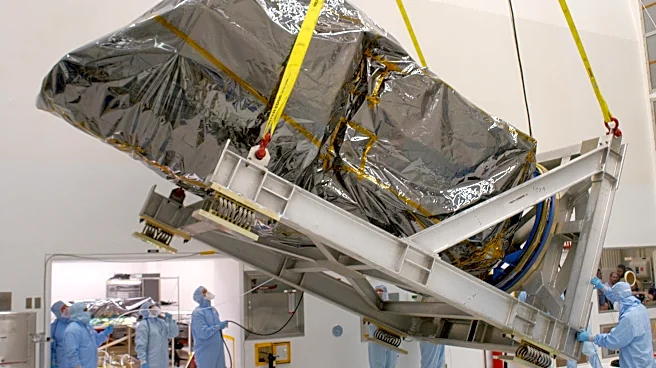
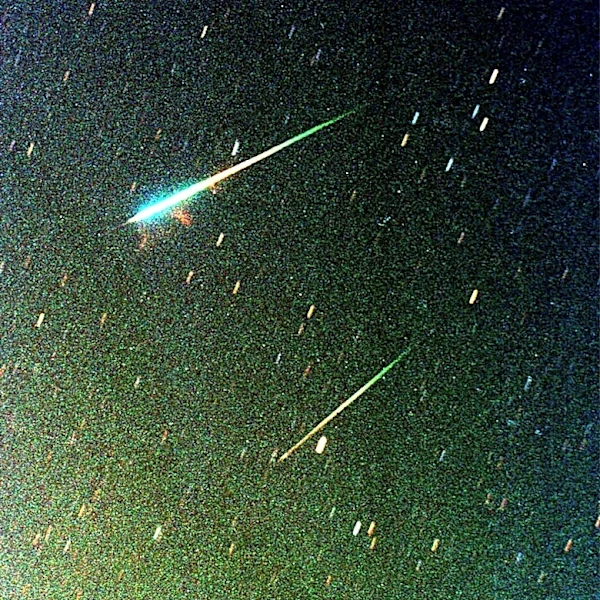
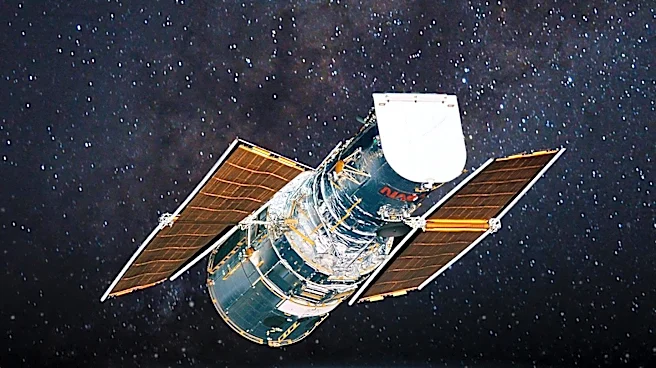
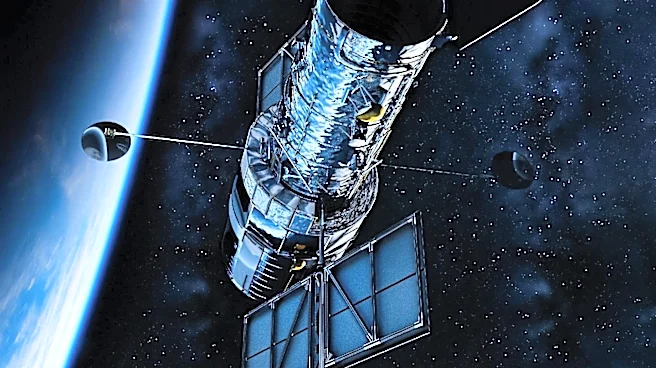
An aging NASA telescope, the Swift Observatory, is predicted to re-enter Earth's atmosphere on Wednesday, November 4, 2026, after a failed rescue attempt. The 1.5-ton spacecraft, launched on November 20, 2004, has been gradually losing altitude due to intense
solar activity. While most of the telescope is expected to burn up during re-entry, NASA's Brad Cenko, the mission's chief scientist, stated that some pieces made of dense tungsten and mirror parts could survive. The U.S. Space Force is tracking the observatory's trajectory, which is expected to re-enter around 3:30 a.m. EST, with an 11-hour uncertainty. NASA has assessed the risk of harm to people on Earth as 'unlikely,' estimating it at roughly 1 in 2,100. The Swift Observatory was a crucial 'first responder' for other space telescopes like Hubble and Webb, specializing in detecting gamma-ray bursts and supernovas.
Why It's Important?
The re-entry of the Swift Observatory marks the end of a highly successful 22-year mission that significantly advanced our understanding of the universe's most powerful explosions. Its ability to swiftly swivel and pinpoint gamma-ray bursts and exploding stars was unparalleled, providing critical data for follow-up investigations by other telescopes. The loss of Swift creates a gap in NASA's observational capabilities, particularly for detecting these high-energy celestial events, which are described as the 'biggest explosions in the universe.' Scientists are now tasked with figuring out how to fill this void. The incident also highlights the challenges of managing space debris and the inherent risks associated with objects re-entering Earth's atmosphere, even with low probabilities of harm.
What's Next?
NASA and the U.S. Space Force will continue to monitor the Swift Observatory's re-entry and provide updated predictions until it occurs. Any surviving wreckage is most likely to fall into the ocean, though swaths of Africa, Australia, India, Southeast Asia, and Central and South America are within the potential re-entry zone. The Swift team is mourning the end of the mission but also expressing gratitude for its extensive contributions to astrophysics. The lessons learned from Swift's successes are hoped to be applied to future generations of space missions to accelerate discoveries. The scientific community will need to develop new strategies and technologies to compensate for the loss of Swift's unique capabilities in detecting and studying transient high-energy astronomical phenomena.
Beyond the Headlines
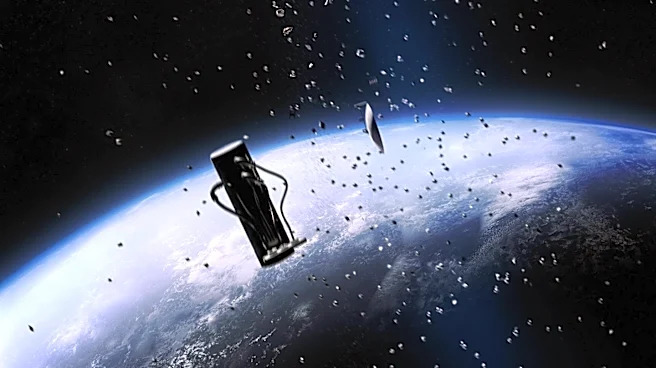
The Swift Observatory's re-entry underscores the finite lifespan of space missions and the complex interplay between space technology and natural phenomena like solar activity. The failed rescue effort by Katalyst Space, involving a three-armed robot named Link, illustrates the cutting-edge but still developing nature of in-orbit servicing and debris mitigation technologies. This event serves as a reminder of the growing challenge of space junk and the need for sustainable practices in space exploration. The scientific community's reliance on specialized instruments like Swift for specific types of observations also highlights the importance of diverse observational platforms to maintain a comprehensive understanding of the cosmos, prompting discussions on future mission planning and technological advancements.