

What's Happening?
Inflation in the United Kingdom increased in December 2025, marking the first rise in five months. The consumer prices index rose to an annual rate of 3.4%, up from 3.2% in November. This increase was primarily driven by higher taxes on tobacco products
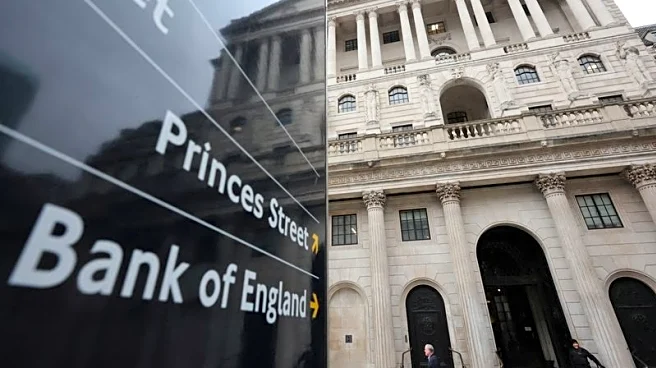
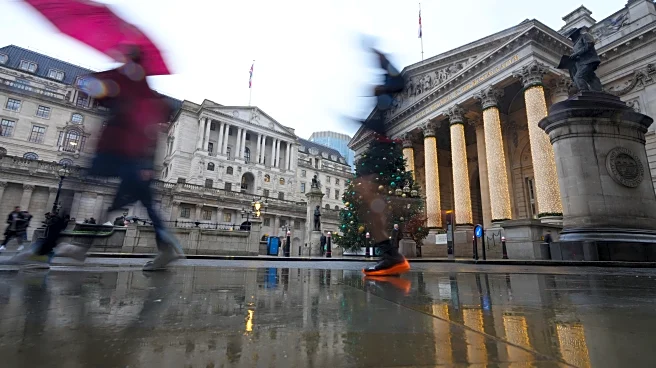
and increased airfares during the Christmas period. Despite this rise, economists predict that this is a temporary blip and expect inflation to decline towards the Bank of England's target of 2% in 2026. The Bank of England is anticipated to cut its main interest rate from the current 3.75% as inflation trends downward.
Why It's Important?
The rise in inflation, although slight, highlights ongoing economic challenges in the UK, particularly as the Labour government seeks to bolster economic growth. The government's ability to manage inflation effectively is crucial for reducing borrowing costs and stimulating economic activity. A decline in inflation towards the target rate could lead to lower interest rates, benefiting consumers and businesses by reducing the cost of borrowing. This could potentially lead to increased investment and spending, aiding economic recovery.
What's Next?
The Bank of England is likely to announce gradual interest rate cuts in response to the expected decline in inflation. This move could support economic growth by making borrowing cheaper for businesses and consumers. The Labour government, facing declining poll ratings, is under pressure to deliver on its economic promises, and managing inflation effectively is a key component of its strategy. Treasury chief Rachel Reeves has pledged that 2026 will be a turning point for the UK economy.