




What's Happening?
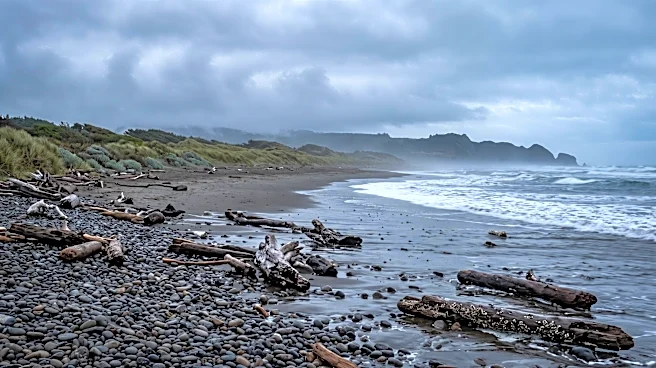
Oregon is marking the 56th anniversary of a notorious event that occurred on November 12, 1970, when state crews attempted to dispose of an 8-ton gray whale carcass that had washed ashore on a Florence beach. In an effort to remove the dead whale, authorities
decided to use dynamite. Crowds gathered to witness the unusual disposal method, which was also documented by KATU reporter Paul Linnman and photojournalist Doug Brazil. When the explosion occurred, large chunks of blubber and a heavy mist were propelled into the air. While no one was injured, one significant piece of blubber landed on and flattened a car. The incident has since become a cautionary tale in Oregon's history, with Linnman famously stating that future officials would remember not only what to do but, more importantly, what not to do in similar situations.
Why It's Important?
The 'exploding whale' incident serves as a memorable lesson in public safety and environmental management, particularly regarding the disposal of large marine carcasses. The event highlighted the unpredictable and potentially dangerous consequences of using unconventional methods for such tasks. While humorous in retrospect, it underscored the need for careful planning and expert consultation in handling environmental challenges. The incident's enduring legacy has influenced current protocols, which typically involve allowing stranded whales to decompose naturally, enabling scavengers to play their role in the coastal ecosystem. This shift reflects a greater understanding of ecological processes and a more cautious approach to intervention, emphasizing minimal human interference unless absolutely necessary. The story remains a popular piece of Oregon folklore, often recounted to illustrate the importance of learning from past mistakes.
What's Next?
Following the lessons learned from the 1970 incident, the standard protocol for disposing of stranded whales in Oregon now typically involves allowing them to decompose naturally on the beach. This approach integrates with the natural coastal ecosystem, allowing scavengers to process the carcass. However, if specific circumstances necessitate intervention, state authorities may consider other, more controlled and environmentally sound methods for disposal. The memory of the exploding whale continues to serve as a historical reference point, ensuring that any future decisions regarding whale carcass removal are made with extreme caution and based on established scientific and safety guidelines. The story will likely continue to be shared as a unique piece of Oregon's history, reinforcing the importance of informed decision-making in environmental management.
Beyond the Headlines
The exploding whale incident transcends a simple anecdote, offering deeper insights into human interaction with nature and the evolution of environmental policy. It illustrates a period when scientific understanding of ecological processes was less developed, and solutions to natural problems were sometimes approached with less foresight. The public spectacle surrounding the event also speaks to a human fascination with the unusual and the dramatic, even when it involves potential hazards. Culturally, the story has become a part of Oregon's identity, a quirky yet significant moment that shaped public perception and official procedures. It highlights the iterative nature of policy-making, where even seemingly minor events can lead to significant changes in how authorities manage environmental challenges, emphasizing a move towards more ecological and less interventionist approaches.