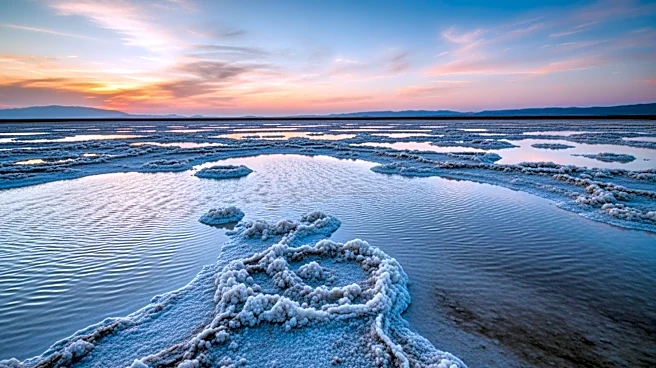

What's Happening?
Congress is evaluating several initiatives to restore the Great Salt Lake ecosystem, focusing on funding for scientific research, increasing water flows, and addressing air quality and public health concerns
from exposed lakebeds. The U.S. Bureau of Reclamation has already allocated $50 million to Utah for water conservation and ecosystem restoration. The Trump Administration has requested $1 billion for a comprehensive federal restoration program. Utah has established the Office of the Great Salt Lake Commissioner and released a strategic plan to balance ecological, economic, and societal interests in restoring the lake.
Why It's Important?
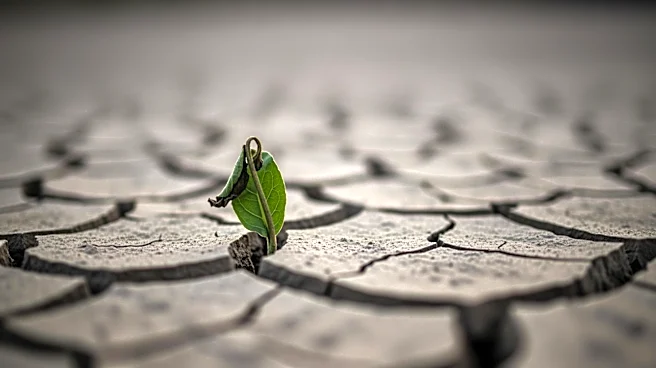
The restoration of the Great Salt Lake is critical due to its ecological, economic, and health implications. The lake supports significant wildlife habitats and contributes to the regional economy through industries like tourism and mineral extraction. Decreasing water levels and increased salinity threaten these ecosystems and economic activities. Additionally, exposed lakebeds can release toxic dust, posing health risks to nearby communities. Federal and state collaboration on restoration efforts could mitigate these risks, preserve biodiversity, and sustain economic benefits, highlighting the importance of coordinated environmental policy and resource management.
What's Next?
Future steps may include Congress authorizing a federal restoration initiative, potentially involving multiple federal agencies and state collaboration. This could lead to increased funding and structured efforts to enhance water flows and address environmental concerns. Stakeholders, including state and federal agencies, may continue to develop and implement strategies to manage water resources effectively. Monitoring and research will likely play a crucial role in guiding these efforts, ensuring that restoration activities are informed by scientific data and aligned with ecological and economic goals.