





What's Happening?
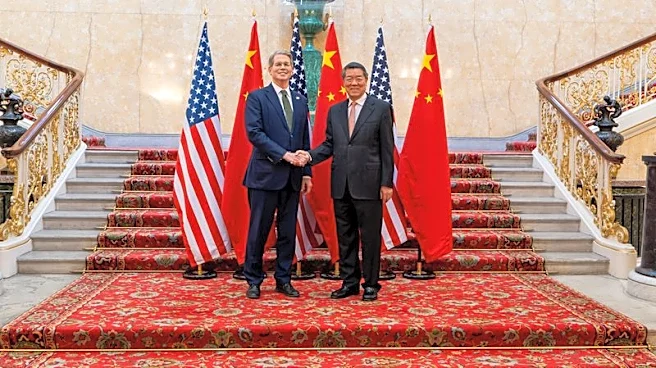
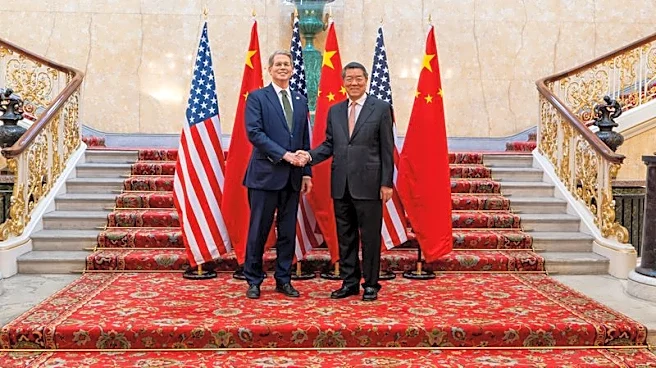
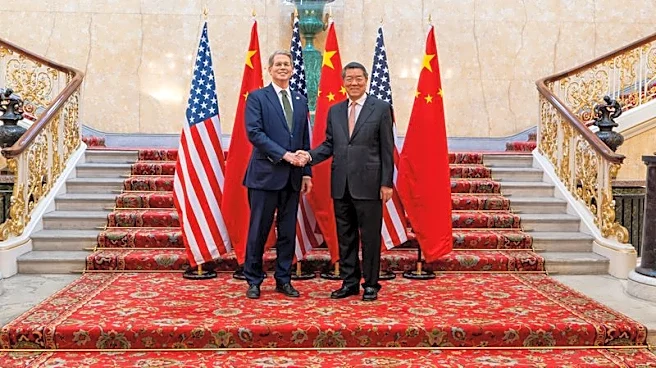
Senior U.S. and Chinese officials, including U.S. Trade Representative Jamieson Greer and Treasury Secretary Scott Bessent, held high-level consultations in New York on September 20. These discussions covered critical areas such as trade, artificial intelligence
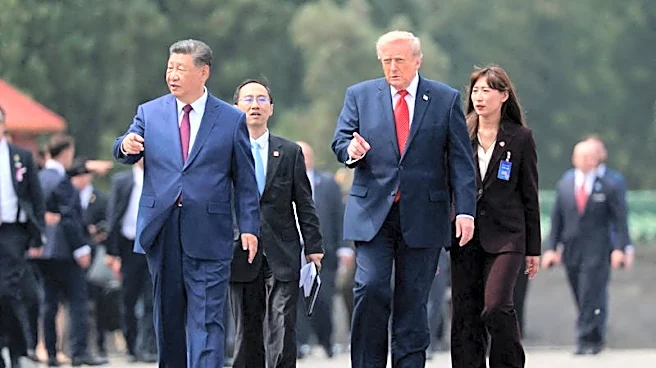
(AI), and other economic issues, serving as preparatory groundwork for an upcoming summit between President Trump and Chinese President Xi Jinping. China's delegation was led by Vice Premier He Lifeng. Both sides characterized the talks positively, with Bessent calling them highly successful and China describing them as candid, in-depth, and constructive. While no detailed package of binding commitments was announced, the meetings aimed to advance negotiations and establish mechanisms for improved communication, particularly regarding a proposed AI dialogue and a 'Board of Trade' for non-sensitive goods. The commercial relationship between the two nations has seen a substantial contraction, with total U.S.-China goods and services trade falling 25.1% in 2025 to an estimated $494.6 billion, according to the U.S. Trade Representative.
Why It's Important?
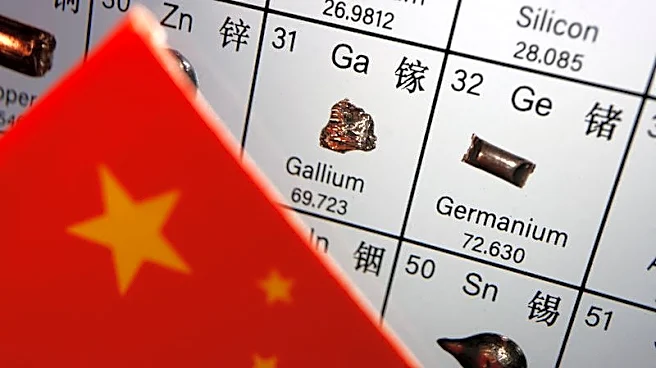
These high-level talks are crucial for stabilizing and potentially re-shaping the complex economic relationship between the U.S. and China. The discussions on trade, tariffs, and critical minerals directly impact U.S. industries, supply chains, and consumer costs. A potential reduction in tariffs on non-sensitive goods could benefit U.S. manufacturers, retailers, and agricultural exporters by lowering import costs and increasing market access. Conversely, the expiration of the existing trade truce in November 2026, if not extended or replaced, could reintroduce significant uncertainty regarding costs, sourcing decisions, and inflation for U.S. businesses. The inclusion of AI in the dialogue is particularly significant, as both nations are competing for leadership in this rapidly evolving technological field. Establishing communication mechanisms for AI incidents could mitigate risks and misunderstandings, which is vital for national security and technological stability, impacting U.S. tech companies and defense sectors.
What's Next?
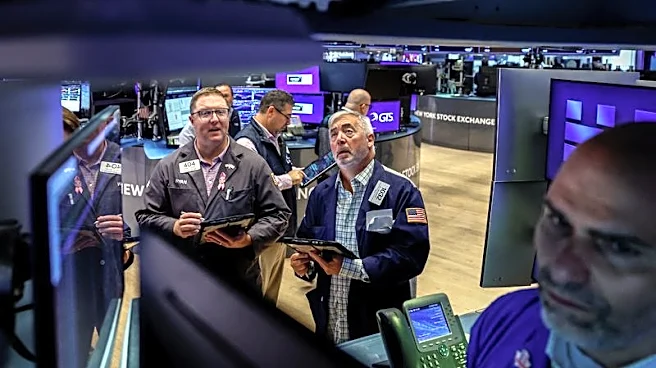
The immediate next step is the anticipated summit between President Trump and Chinese President Xi Jinping, where the outcomes of these preparatory talks will likely be formalized or further negotiated. Investors and businesses will be closely watching for specific announcements, including a detailed list of goods eligible for lower tariffs, an extension or replacement of the November trade truce, and commitments regarding rare-earth and critical-mineral shipments. Further details on the scope and timing of the proposed AI incident-notification mechanism and any changes to semiconductor or technology-export restrictions will also be critical. The U.S. will continue to press for changes in Chinese trade and industrial policies, while China seeks further tariff reductions. The success of these ongoing dialogues will determine the trajectory of U.S.-China economic relations, influencing global markets and strategic competition in key sectors like technology and critical resources.
Beyond the Headlines
Beyond the immediate economic and trade implications, these U.S.-China talks reflect a deeper geopolitical struggle for technological and economic dominance. The emphasis on AI, critical minerals, and technology export restrictions underscores the strategic competition between the two superpowers. While dialogue on AI safety and a 'Board of Trade' for non-sensitive goods suggests a pragmatic approach to managing competition, it does not signal an end to the underlying strategic rivalry. For the U.S., these discussions are about securing supply chains, protecting intellectual property, and maintaining technological leadership, while for China, they are about economic development and global influence. The long-term implications could involve a re-alignment of global supply chains, increased investment in domestic production of critical technologies and minerals in the U.S., and the establishment of new international norms for AI governance. The outcome will shape not only bilateral relations but also the broader international economic and technological landscape.