




What's Happening?
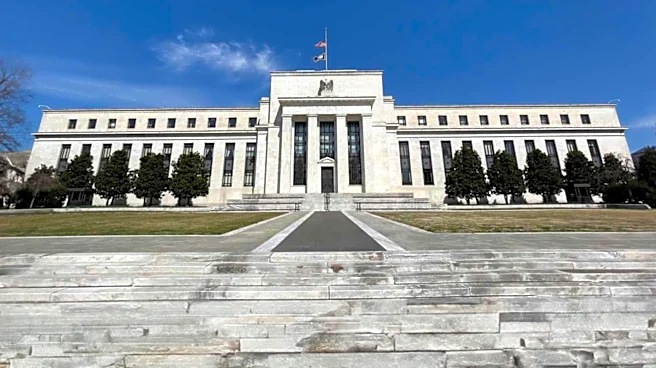
President Trump has publicly called on the Federal Reserve to lower interest rates, citing the strength of the U.S. economy and recent job growth. Following an August jobs report that showed U.S. employers added 162,000 jobs, significantly exceeding economists'
expectations of 53,000, President Trump argued that a strong economy warrants lower interest rates. He posted on Truth Social, stating, “Lower the interest rates because the U.S.A. is a much stronger credit than it was just a short time ago! A STRONG COUNTRY MEANS A LOWER INTEREST RATE – IT’S A BETTER CREDIT.” He further escalated his demands by threatening to cut off trade with countries with which the U.S. has a deficit if the Fed does not comply. The central bank has maintained interest rates at a range of 3.5 to 3.75% for its last five meetings, as inflation remains above its 2% target. Vice President JD Vance and Treasury Secretary Scott Bessent have also voiced support for lower rates, with Vance stating, “We believe that the Fed should be lowering interest rates.”
Why It's Important?
President Trump's direct and public pressure on the Federal Reserve, coupled with threats of trade action, highlights a significant challenge to the central bank's independence. The Fed's mandate is to manage monetary policy to achieve maximum employment and price stability, typically free from political interference. His threats to initiate a trade war if interest rates are not lowered could introduce considerable instability into global markets and international relations. Such actions could undermine investor confidence and disrupt established trade agreements, potentially leading to economic repercussions for U.S. businesses and consumers. The ongoing debate between the executive branch and the Federal Reserve over interest rate policy underscores a fundamental tension regarding economic governance and the appropriate balance of power in setting monetary policy. This situation could also influence the Fed's future decisions, as it navigates political pressure while striving to maintain its credibility and adherence to its dual mandate.
What's Next?
The Federal Reserve is expected to hold its next meeting soon, where it will decide on interest rates. Despite President Trump's calls for cuts, the stronger-than-expected August jobs report, which eased concerns about the labor market, could give the Fed more leeway to focus on inflation. Traders are currently pricing in a 60% chance that the Fed will hike rates by a quarter point at its upcoming meeting, according to CME FedWatch. The key factor influencing the Fed's decision will be the upcoming U.S. inflation data, including consumer and producer prices. If inflation remains high, the jobs report could provide justification for the Fed to raise rates further. Conversely, softer inflation data might allow officials to maintain current rates. President Trump's continued public statements and potential trade actions will likely remain a significant external factor for the Fed to consider, even as it aims to make decisions based on economic data.
Beyond the Headlines
The persistent pressure from President Trump on the Federal Reserve raises deeper questions about the institutional independence of the central bank, a cornerstone of modern economic policy. Historically, central bank independence is seen as crucial for effective monetary policy, shielding decisions from short-term political cycles and ensuring focus on long-term economic stability. If political threats, such as those concerning trade, become a regular feature of monetary policy debates, it could erode the Fed's autonomy and potentially lead to less predictable and more politically motivated economic decisions. This could have long-term implications for the U.S. economy's stability and its standing in global financial markets. The situation also highlights the broader tension between elected officials, who often prioritize immediate economic indicators and public sentiment, and unelected technocrats, who are tasked with maintaining economic equilibrium through more measured and data-driven approaches.