





What's Happening?
Fighting has intensified in Yemen, with Houthi fighters clashing with Yemeni government forces in the country’s southwest. This escalation comes despite a truce that had largely held since 2022. Both sides are engaging in exchanges of fire and drone attacks
across nearly the entire frozen front line. Houthi forces have launched attacks on army positions and attempted to infiltrate areas, particularly in the Maqbanah Mountains, west of Taiz province, and areas like al-Ahtoub, al-Tuwair, al-Kadha, and Jabal Ghabari. The Yemeni Army Media Centre reported that more than 18 Houthi fighters were killed, and others wounded or captured during clashes on Thursday. An unnamed military source also indicated that 13 government forces were killed. The Houthis are reportedly attempting to advance to cut the road linking Taiz to al-Makha (Mocha), aiming to sever Taiz city from the coast and gain a foothold in the Red Sea. This renewed conflict follows a stall in progress towards a lasting peace agreement in 2023, which coincided with the escalation of tensions in the wider region.
Why It's Important?
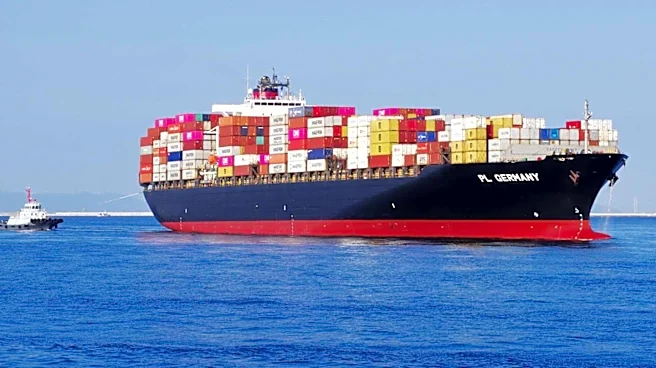
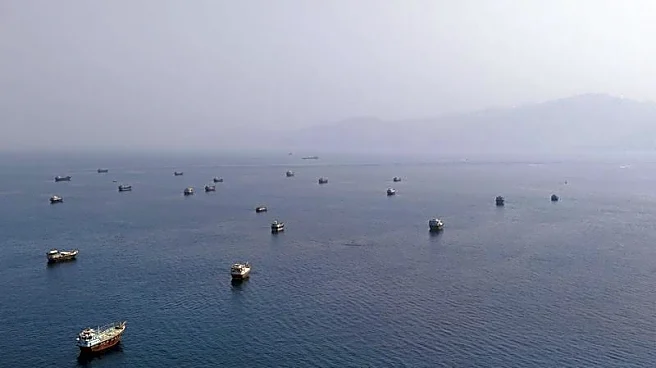
The renewed intensity of fighting in Yemen carries significant implications for international shipping, particularly in the Red Sea, a critical route for global trade. The Houthis' objective to gain control of strategic coastal areas, such as the port city of al-Makha, would provide them with a stronger position to disrupt maritime traffic. This is especially concerning given past Houthi attacks on government-affiliated Saudi oil tankers and the reported interception of a large consignment of Iranian arms, including Mandab-2 anti-ship cruise missiles, destined for the Houthis. These missiles have a range of approximately 180 nautical miles and pose a threat to ships in the lower Red Sea and the Maritime Security Transit Corridor in the Gulf of Aden. The potential for increased attacks on shipping could lead to higher insurance premiums, rerouting of vessels, and delays in global supply chains, impacting U.S. and international economic stakeholders reliant on this vital trade artery. The conflict also highlights the ongoing regional instability and the challenges in maintaining peace agreements in the face of broader geopolitical tensions.
What's Next?
The immediate future will likely see continued clashes as both Houthi and Yemeni government forces vie for territorial control, particularly along the Red Sea coast. Yemeni government officials have reported regaining control of some areas, indicating a fluid and contested battlefield. The Saudi-led coalition, while currently not fully engaged, is reportedly preparing for a potential return to full-scale warfare, suggesting a possible re-escalation of external involvement. The focus will remain on whether government forces can thwart the Houthi's advancement and prevent them from securing strategic coastal positions that would enhance their ability to target international shipping. Further attempts at resuming peace talks and establishing a ceasefire are likely to be challenged by the ongoing military actions. The international community will be closely monitoring the situation for any direct threats to maritime security in the Red Sea, which could prompt a coordinated response to protect global trade routes.
Beyond the Headlines
The resurgence of conflict in Yemen, despite a prior truce, underscores the fragility of peace in a region deeply affected by geopolitical rivalries and internal divisions. The Houthis' strategic focus on gaining coastal control and their continued access to advanced weaponry, as evidenced by the intercepted Iranian arms, highlights the complex interplay of local conflict and external support. This situation raises ethical concerns regarding the humanitarian impact of prolonged warfare on the Yemeni population, who have already endured years of conflict and a severe humanitarian crisis. Legally, the targeting of international shipping could be considered a violation of international maritime law, potentially leading to calls for stronger international intervention or sanctions. Culturally, the conflict continues to fragment Yemeni society, exacerbating existing divisions and hindering efforts towards national reconciliation. The long-term shift could see the Red Sea becoming an increasingly militarized zone, impacting not only trade but also regional stability and the balance of power in the Middle East.