



What's Happening?
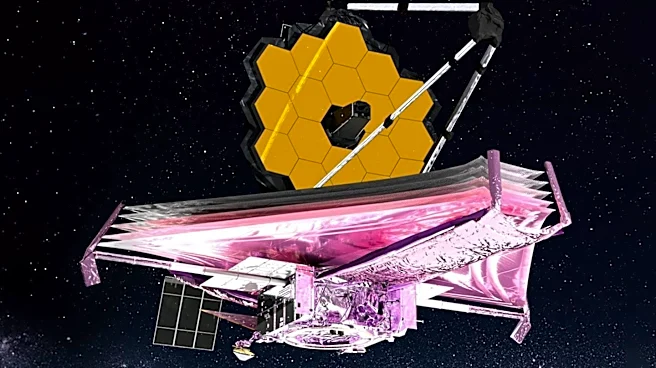
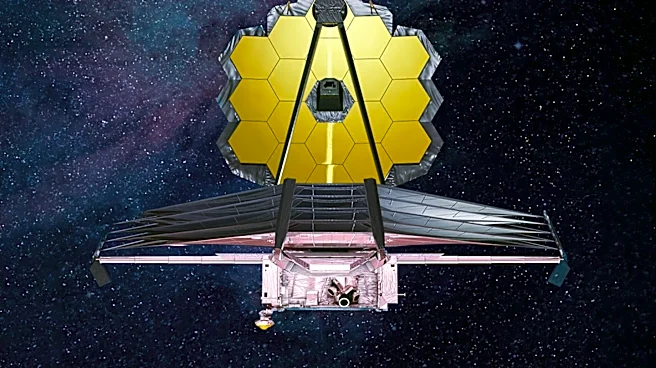
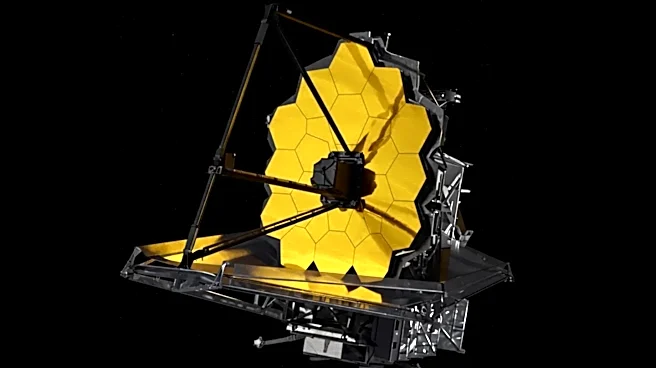
The James Webb Space Telescope (JWST) has provided a detailed map of gas flow in the galaxy NGC 4696, revealing a hook-shaped feature around 800 light-years wide composed of gas moving at high speeds. This discovery builds on previous observations by
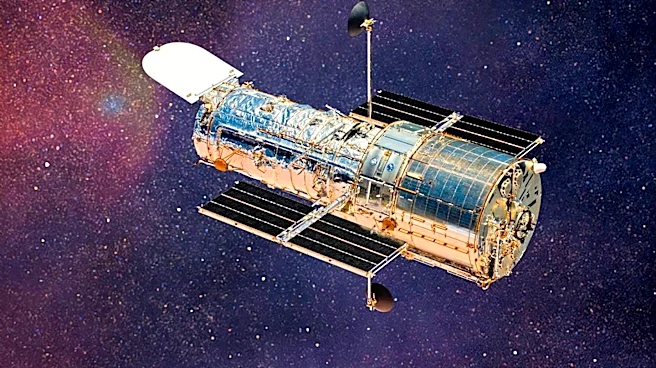
the Hubble Space Telescope, which identified a swirl of gas near the galaxy's central supermassive black hole. The JWST's findings suggest a self-regulating cycle where the black hole alternates between periods of feeding and fasting. This cycle involves gas cooling and forming filaments that fall back to the black hole, triggering growth and restarting the process.
Why It's Important?
Understanding the feeding mechanisms of supermassive black holes is crucial for comprehending their rapid growth in the early universe. The JWST's observations provide insights into how these cosmic giants can grow so quickly, despite theories suggesting they should push away the matter they consume. This research could help scientists unravel the mysteries of black hole formation and growth, which are key to understanding the evolution of galaxies and the universe. The findings also highlight the JWST's capabilities in advancing our knowledge of cosmic phenomena.
What's Next?
Future research will likely focus on further exploring the connection between gas filaments and supermassive black holes. Scientists may use the JWST to study other galaxies and black holes to confirm the self-regulating cycle observed in NGC 4696. These studies could lead to a deeper understanding of the role black holes play in galaxy evolution and the broader cosmic environment. Additionally, the JWST's continued observations may uncover new phenomena related to black hole feeding mechanisms.