







What's Happening?
The United Nations University Institute for Water, Environment and Health (UNU-INWEH) has released a report detailing the environmental costs associated with artificial intelligence (AI). The report, titled 'Environmental Cost of Artificial Intelligence:
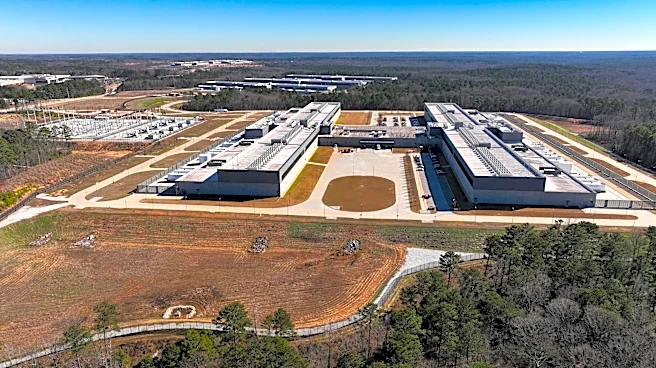
Carbon, Water, and Land Footprints,' examines the significant environmental impacts of the energy required to power AI systems. It highlights that AI's environmental footprint is not solely dependent on electricity consumption but also on the sources of that electricity. The report emphasizes that AI's growth is driving increased use of energy, water, and land, raising environmental and equity challenges. It calls for a responsible AI ecosystem that incorporates transparency, efficiency, equity, and environmental justice.
Why It's Important?
The report underscores the need for sustainable practices in the rapidly expanding AI sector. As AI becomes more integrated into various aspects of life, its environmental impact grows, affecting energy consumption, water resources, and land use. This has significant implications for global infrastructure and environmental policy. The findings highlight the importance of considering the environmental costs of AI in energy, climate, water, and land-use planning. The report's call for a responsible AI ecosystem is crucial for ensuring that technological advancements do not disproportionately impact vulnerable communities and regions.
What's Next?
The report suggests that addressing AI's environmental footprint requires global cooperation and sustainable practices. It advocates for integrating AI's environmental costs into broader energy and climate strategies. This includes promoting transparency in AI operations and encouraging the use of low-impact energy sources. The report also calls for lifecycle responsibility and equity in AI development, ensuring that the benefits of AI do not come at the expense of environmental and social justice.
Beyond the Headlines
The report frames AI's environmental impact as a governance and justice issue, not just a technical challenge. It highlights the need for policies that address the distribution of environmental burdens associated with AI infrastructure. This includes considering the siting of data centers and the sourcing of electricity, water, and minerals. The report's emphasis on equity and environmental justice points to the broader societal implications of AI's growth, urging stakeholders to consider the long-term impacts on communities and ecosystems.