






What's Happening?
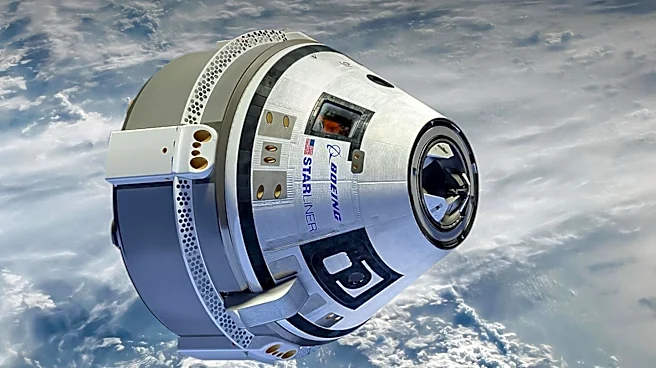
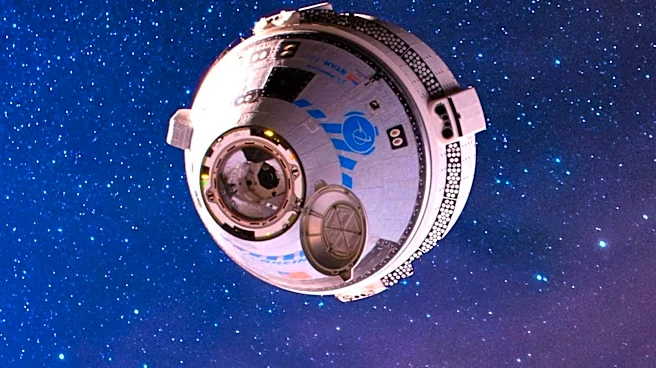
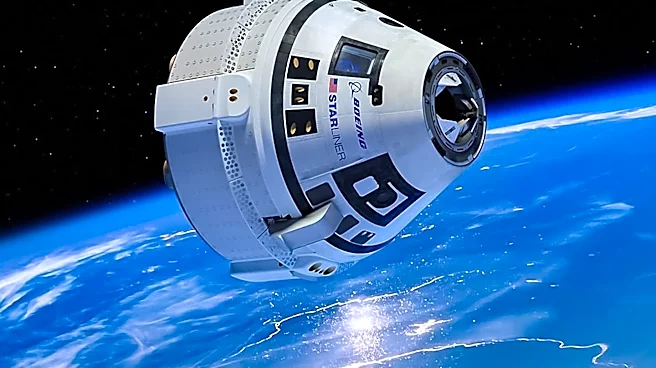
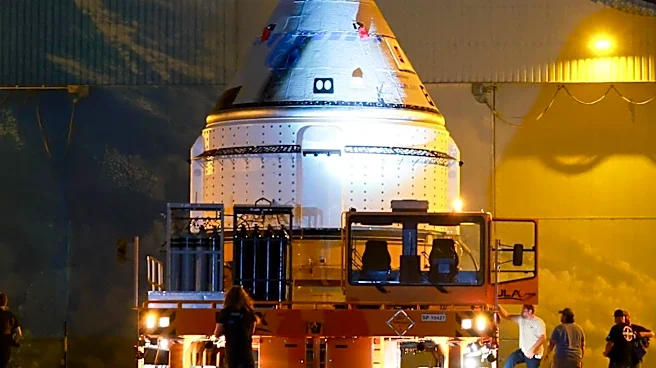
A recent report by NASA's Office of Inspector General has highlighted significant issues with Boeing's CST-100 Starliner commercial crew vehicle, attributing delays to overconfidence and unrealistic scheduling. The report indicates that NASA's confidence in Boeing's design,
based on its heritage systems and spaceflight experience, led to the acceptance of an unrealistic launch schedule. This overconfidence resulted in Boeing skipping integrated testing, which contributed to technical problems during the Crew Flight Test (CFT) mission. The report also notes that NASA's lack of access to Starliner flight simulator data further compounded these issues. The Starliner has faced multiple delays, with its first crewed flight test originally planned for 2021 but not occurring until June 2024. The report raises concerns about Boeing's ability to complete its contracted flights before the International Space Station's planned decommissioning in 2030.
Why It's Important?
The delays and technical challenges faced by Boeing's Starliner have significant implications for NASA's commercial crew program and its ability to maintain a reliable transportation system to the International Space Station (ISS). The ongoing issues could impact NASA's strategic goals and its partnership with Boeing, potentially leading to increased costs and risks. The report's findings highlight the need for improved oversight and realistic scheduling in future projects. The delays also underscore the importance of having multiple providers for crew transportation to ensure redundancy and reliability. As Boeing struggles to meet its commitments, NASA may need to rely more heavily on SpaceX, which has successfully provided continuous crew transportation to the ISS.
What's Next?
Boeing is under pressure to address the technical challenges identified in the report, including helium leaks, propulsion system failures, and parachute anomalies. The company must also work towards obtaining human-rating certification for the Starliner. NASA's Aerospace Safety Advisory Panel has indicated that the next Starliner mission, Starliner-1, is expected to fly within the next year, but no specific timetable has been provided. The report suggests that certification for crewed missions may not occur until 2027, further delaying Boeing's ability to fulfill its contract with NASA. The outcome of these efforts will be critical in determining the future of Boeing's role in NASA's commercial crew program.