






What's Happening?
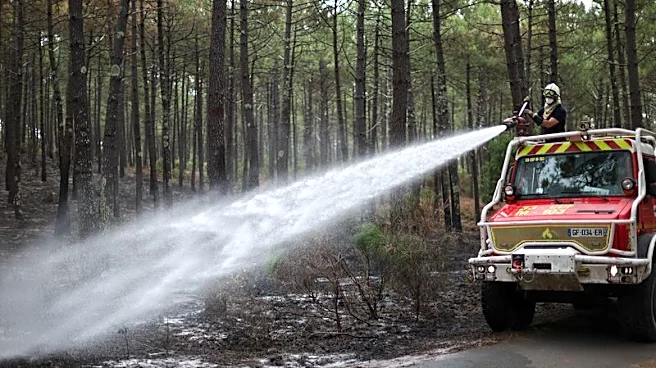
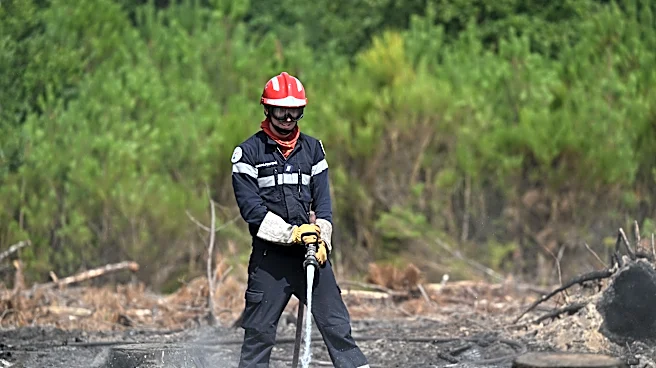
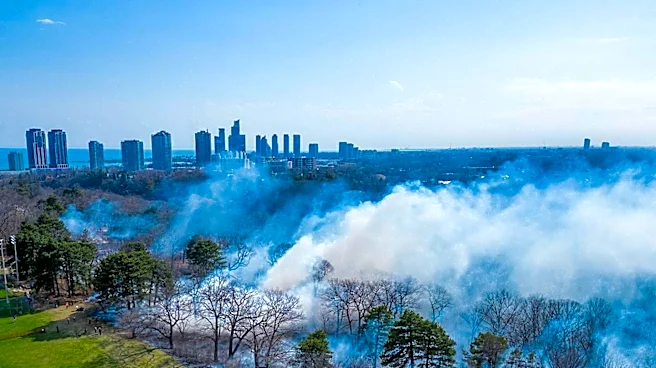
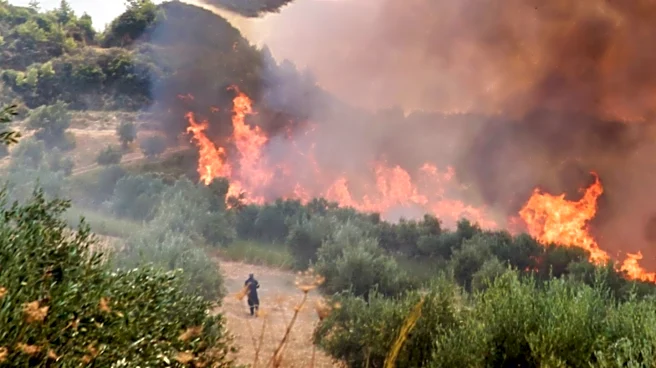
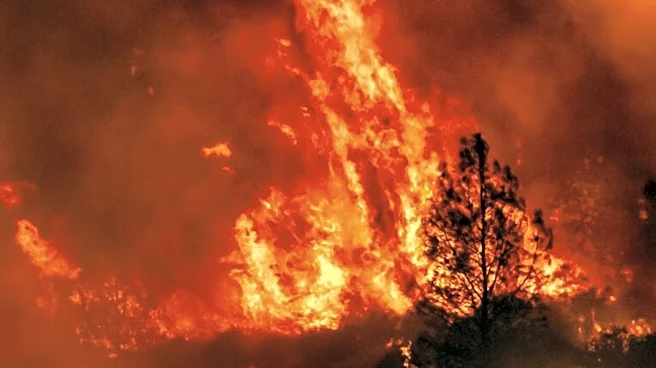
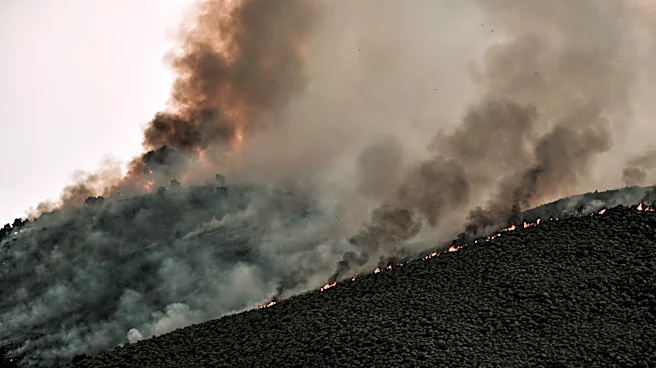
In southwestern Turkey, hundreds of firefighters are battling a wildfire fueled by strong winds near the resort city of Bodrum. As of Friday, five out of six fires have been brought under control, with efforts continuing to extinguish the remaining blaze
in the Cine area. The fires have led to evacuations and significant damage, with 65 structures affected and 5,000 hectares of forestland destroyed. The Turkish government has mobilized extensive resources, including helicopters, firefighting planes, and ground crews, to combat the fires.
Why It's Important?
The wildfires in Turkey highlight the increasing frequency and intensity of such events, exacerbated by climate change and extreme weather conditions. These fires pose significant threats to local communities, ecosystems, and economies, particularly in regions reliant on tourism. The situation underscores the need for enhanced disaster preparedness and response strategies, as well as long-term measures to mitigate the impacts of climate change. The fires also draw attention to the importance of international cooperation in addressing environmental challenges.
What's Next?
As firefighting efforts continue, authorities remain vigilant for potential flare-ups due to ongoing strong winds. The Turkish government is likely to assess the damage and implement recovery plans, including support for affected communities and restoration of damaged ecosystems. In the long term, Turkey may need to strengthen its fire prevention and management strategies, potentially seeking international assistance and expertise. The situation could also prompt broader discussions on climate resilience and adaptation measures in the region.
Beyond the Headlines
The wildfires in Turkey reflect broader global trends of increasing natural disasters linked to climate change. These events highlight the interconnectedness of environmental, social, and economic systems, emphasizing the need for integrated approaches to disaster risk reduction. The fires also raise ethical considerations regarding the responsibility of developed nations to support vulnerable countries in building resilience against climate impacts. As climate change continues to pose significant challenges, collaborative efforts will be essential to safeguard communities and ecosystems worldwide.