





What's Happening?
The U.S. Army recently conducted tests of FD-1 FPV interceptor drones at the Ustka training range in northern Poland. These exercises, dubbed Operation Audacious Fury, took place from November 2 to 6 and were organized by the Tactics, Integration, and Employment
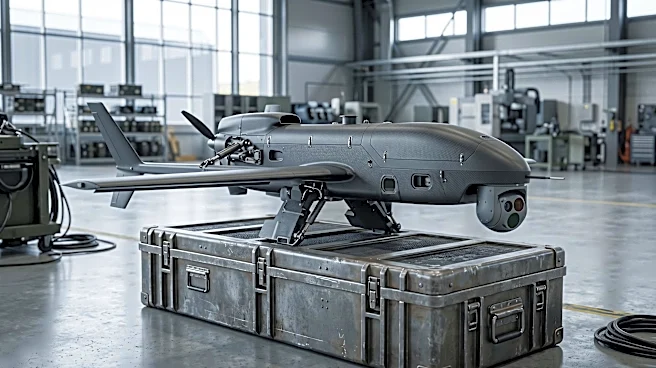
Battery of the 5th Battalion, 4th Air Defense Artillery Regiment. The primary objective was to practice countermeasures against large-scale drone attacks, specifically targeting Group 1–3 drones, which include small to medium-sized UAVs. The unit involved is responsible for the air defense of U.S. forces in Europe and Africa. The FD-1 drone, developed by Mountain Horse Solutions, is an FPV interceptor designed to be guided by an operator towards enemy drones. It can be prepared for launch in under two minutes and can operate autonomously or receive target designations from radars and sensors, though human authorization is required for each interception. The U.S. Army placed a second order for the FD-1 in October 2026, following an initial order earlier in the year, though contract details remain undisclosed.
Why It's Important?
These tests highlight a significant shift in U.S. military strategy towards cost-effective solutions for air defense, particularly against the growing threat of drone warfare. The use of low-cost, short-range interceptors like the FD-1 aims to prevent the expenditure of expensive, high-precision munitions on relatively inexpensive aerial targets. This approach could redefine how the U.S. and its allies manage air defense in future conflicts, especially in regions like Europe where drone threats are increasingly prevalent. The development and deployment of such technology also underscore the evolving nature of modern warfare, where readily available and affordable drones can pose substantial challenges to traditional military assets. For U.S. forces stationed abroad, particularly in Europe, this capability enhances their defensive posture and operational readiness against sophisticated and unsophisticated drone threats alike, potentially saving lives and resources.
What's Next?
The continued investment in and testing of FD-1 interceptor drones suggest a broader integration of such technologies into U.S. military operations. Future developments may include further refinement of the drone's autonomous capabilities, enhanced integration with existing air defense systems, and potential deployment to other strategic locations. The U.S. Army's focus on cost-effective countermeasures indicates a long-term strategy to address drone threats without depleting high-value munitions. This could lead to increased procurement of FD-1s and similar interceptor drones, influencing defense spending and technological innovation in the defense sector. Allies of the U.S. may also look to adopt similar strategies and technologies, potentially fostering international collaboration in drone defense research and development.
Beyond the Headlines
The emphasis on low-cost interceptors like the FD-1 reflects a strategic adaptation to the democratization of drone technology. As drones become more accessible and sophisticated, the ability to counter them efficiently and economically becomes paramount. This shift has broader implications for military doctrine, potentially leading to a re-evaluation of traditional air superiority concepts. Furthermore, the ethical considerations surrounding autonomous or semi-autonomous interceptor drones, even with human authorization, will likely become a more prominent discussion point. The development also signals a growing market for counter-drone technologies, which could spur innovation and competition among defense contractors, impacting the global defense industry and potentially leading to new export opportunities for U.S. defense firms.