







What's Happening?
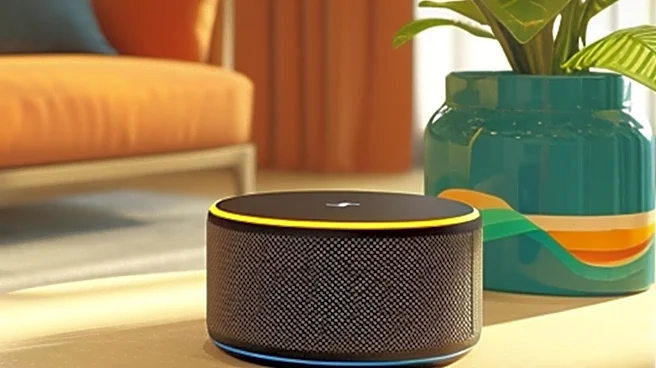
AI home assistants are increasingly adopting local processing capabilities to improve user privacy and operational efficiency. This shift moves away from cloud-dependent systems, allowing smart home devices to perform tasks and process data directly on the
device. For instance, Home Assistant now supports local AI models through third-party integrations like Local OpenAI LLM, enabling users to automate smart home functions without relying on external cloud services. This integration allows for direct communication with local AI models, such as the Gemma 4 snap, to control devices like lights. Furthermore, ambient AI assistants, exemplified by Loona DeskMate, are utilizing local edge AI computing to offer proactive assistance. These devices are designed with privacy in mind, incorporating physical mute switches, visible status indicators, and granular data retention controls that automatically purge temporary memory buffers, ensuring sensitive data remains on the local hardware.
Why It's Important?
The move towards local processing in AI home assistants is significant for several reasons, primarily addressing growing concerns about data privacy and security. By processing data on-device, users can maintain greater control over their personal information, reducing the risk of data breaches associated with cloud storage. This approach also enhances the reliability and responsiveness of smart home systems, as devices no longer depend on internet connectivity or remote server response times for core functions. For consumers, this means a more seamless and secure smart home experience, with faster command execution and reduced latency. For the industry, it signals a shift towards more robust and privacy-centric AI solutions, potentially driving innovation in edge computing and secure hardware development. Companies that prioritize these features are likely to gain a competitive advantage in a market where consumer trust in data handling is paramount.
What's Next?
The trend towards local processing in AI home assistants is expected to continue, with further advancements in on-device AI capabilities and privacy features. Future developments may include more sophisticated local AI models that can handle complex tasks, such as security video classification, directly on the device, reducing the need to send sensitive footage to the cloud. There will likely be increased focus on developing hybrid approaches, where smaller, faster models handle routine commands locally, while larger models are reserved for more intensive analytical tasks. Additionally, the integration of local voice protocols, such as the Wyoming protocol for Home Assistant, could become more widespread, offering a fully local and private voice assistant experience. Consumers can anticipate a new generation of smart home devices that offer enhanced privacy, faster performance, and greater autonomy from cloud services.
Beyond the Headlines
Beyond the immediate benefits of privacy and performance, the shift to local processing in AI home assistants has deeper implications for the future of smart homes and personal technology. This trend could foster a more decentralized internet of things (IoT), where devices operate more independently and securely within a local network, reducing reliance on centralized cloud infrastructures. Ethically, it empowers users with greater control over their digital footprint, aligning with growing demands for data sovereignty. Legally, it may influence future regulations regarding data privacy and device security, potentially setting new standards for how smart devices handle personal information. Culturally, it could reshape user expectations for technology, moving towards a model where convenience does not come at the expense of privacy, fostering greater trust in AI-powered home environments and accelerating the adoption of smart home technologies among privacy-conscious consumers.