







What's Happening?
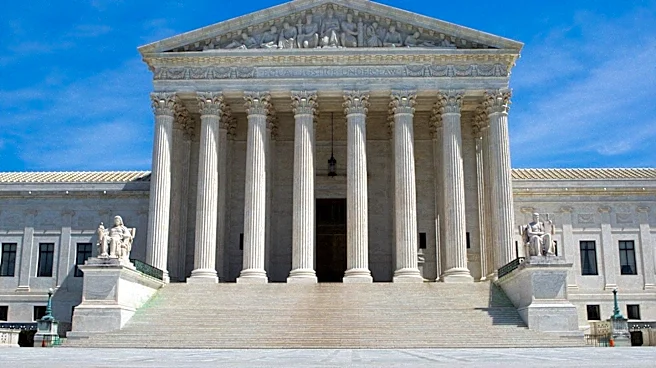
During recent oral arguments, Supreme Court justices expressed skepticism regarding the application of the Video Privacy Protection Act (VPPA) of 1988 to online data sharing. The case involves Michael Salazar, who is suing Paramount Global, alleging the company
violated the VPPA by sharing his video-watching history from 247sports.com with Facebook for targeted advertising. Chief Justice John G. Roberts Jr. questioned whether the statute's original purpose, enacted in an era of VCRs and video rental stores, should be stretched to cover modern online data collection. While some justices acknowledged the ease with which companies like Paramount could obtain user consent for data sharing, the core debate revolves around whether Salazar qualifies as a 'consumer' under the VPPA's definition of a 'subscriber of goods or services from a video tape service provider.' Paramount argues that merely signing up for a free newsletter and watching videos does not make Salazar a consumer under the act, especially if the product purchased is not audiovisual in nature.
Why It's Important?
This Supreme Court case holds significant implications for digital privacy and the interpretation of outdated laws in the context of rapidly evolving technology. A ruling in favor of Salazar could open the door to a floodgate of litigation against media companies and other entities that feature videos on their websites, potentially leading to substantial financial liabilities. Conversely, a ruling against Salazar could limit the avenues available for individuals to seek redress for perceived privacy violations in the digital realm, highlighting a gap in federal consumer privacy protections. The outcome will influence how companies handle user data, particularly video consumption data, and could necessitate clearer consent mechanisms for online activities. This case underscores the ongoing challenge for the judiciary to adapt existing legislation to unforeseen technological advancements and the pervasive nature of online data collection.
What's Next?
The Supreme Court will decide whether the Video Privacy Protection Act, originally designed for video rental stores, applies to online video viewing and data sharing. The decision will hinge on the legal interpretation of what constitutes a 'consumer' and a 'video tape service provider' in the digital age. Depending on the ruling, there could be significant ramifications for how online platforms collect and share user data, potentially leading to new industry standards for consent and data privacy. If the court rules in favor of applying the VPPA to online activities, it could spur Congress to consider more comprehensive federal consumer privacy legislation to address the complexities of internet-era data collection, as current statutes are often seen as insufficient.
Beyond the Headlines
The case of Salazar v. Paramount Global highlights a broader societal and legal challenge: how to protect individual privacy in an increasingly data-driven world where technology outpaces legislation. The VPPA, a relic from the 1980s, was never intended to address the intricate web of online tracking and targeted advertising. This situation forces the Supreme Court to either stretch the interpretation of an old law to fit new circumstances or acknowledge the legislative void. The outcome could set a precedent for how courts approach similar cases involving outdated laws and modern technology, potentially influencing future legal battles over data privacy, intellectual property, and digital rights. It also brings to the forefront the ethical considerations of data monetization and the extent to which companies can leverage user information without explicit, informed consent.