







What's Happening?
A Ukrainian official has disputed Elon Musk's claim that Ukraine's military violated Starlink's terms of service by using it for offensive drone strikes, leading to restrictions on high-speed satellite communication. Serhii Beskrestnov, a defense technology
advisor to Ukrainian President Volodymyr Zelenskyy, stated that it would be "physically impossible" for Ukraine to use commercial Starlink for deep-strike or medium-range offensive operations due to pre-existing operational limitations. Beskrestnov highlighted that Starlink's civilian system in Ukraine does not function over Russian territory and that Ukrainian drones using Starlink have had a speed restriction of 70 to 90 km/h for months. Ukrainian officials previously reported that these restrictions disrupted military drone services and left the country vulnerable to Russian attacks, though high-speed service for Starlink and Starshield has since been restored.
Why It's Important?
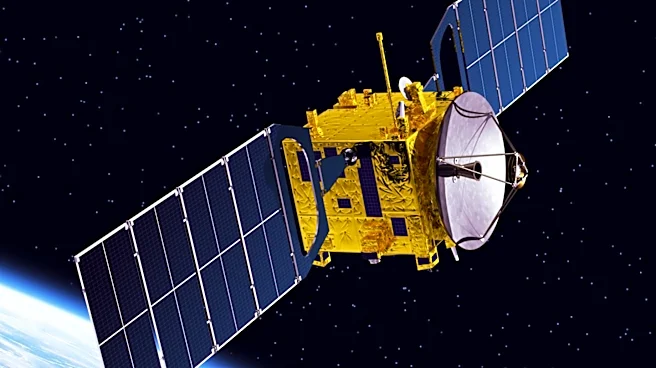
This dispute between Ukraine and Elon Musk over Starlink's usage terms highlights the complex and often contentious role of private technology companies in modern warfare. Starlink, a commercial satellite internet service, has become critical for Ukraine's military communications, making any restrictions or disputes highly impactful. The disagreement raises questions about the control and ethical boundaries of dual-use technologies in conflict zones. For the U.S., which has provided significant support to Ukraine, the reliability and accessibility of such communication systems are paramount. Any disruption, whether due to technical limitations or policy decisions by private entities, can directly affect military operations and national security interests. This situation also underscores the need for clear agreements and oversight when commercial technologies are integrated into military strategies, especially when the provider's policies can unilaterally alter operational capabilities.
What's Next?
The immediate focus for Ukraine will be to ensure stable and reliable satellite communication services, potentially by continuing to develop alternative "sovereign" satellite systems with partners like Norway, Finland's Nokia, and ICEYE. The dispute may prompt further discussions between SpaceX, the U.S. government, and Ukrainian authorities to clarify the terms of service for Starlink and Starshield in military contexts. It could also lead to increased scrutiny of how private companies manage their services in conflict zones and the extent of their responsibility. For Elon Musk and SpaceX, addressing these concerns transparently will be crucial for maintaining trust and their reputation as a critical technology provider. The incident may also influence future contracts and agreements for military use of commercial satellite services, potentially leading to more explicit clauses regarding operational parameters and dispute resolution.
Beyond the Headlines
The controversy surrounding Starlink's use in Ukraine delves into deeper ethical and legal questions about the weaponization of commercial technology and the responsibilities of tech giants in global conflicts. When a private company's technology becomes indispensable for a nation's defense, its CEO gains significant geopolitical influence, raising concerns about accountability and democratic oversight. The incident also highlights the challenges of maintaining neutrality for companies operating in war zones, as their services can be perceived as aiding one side over another. This situation could set precedents for how international law and norms apply to private sector involvement in armed conflicts, particularly concerning the provision and restriction of critical infrastructure. The push for "sovereign" satellite systems by Ukraine and its allies reflects a broader recognition of the strategic vulnerability associated with relying on external commercial providers for essential defense capabilities.