






What's Happening?
New transparent bridge deck forms are being introduced to address long-standing challenges in bridge deck inspection and preservation. Traditionally, steel corrugated stay-in-place (SIP) forms have been used, which obstruct visibility of the concrete
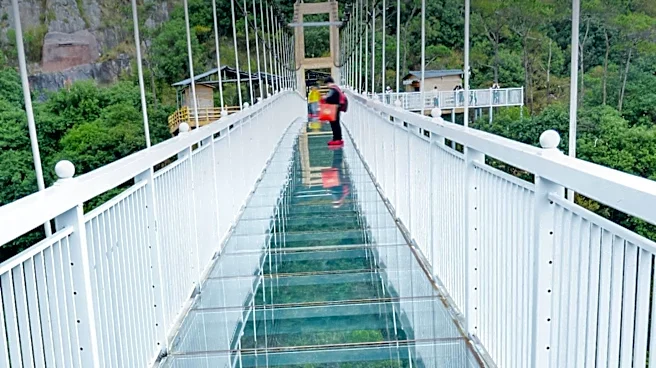
pour and the underside of the deck, making it difficult to detect defects like honeycombing or voids until they manifest as structural distress years later. The transparent forms, made from durable, high-clarity acrylic sheets supported by a steel frame, allow real-time visual assessment of concrete placement and consolidation during construction. This innovation enables inspectors and quality-control personnel to immediately identify and correct issues. Post-construction, these clear panels provide continuous visual access to the deck's underside for routine inspections, offering a more accurate assessment of its condition. This technology aligns with the 2022 National Bridge Inspection Standards (NBIS) Final Rule and the Specifications for the National Bridge Inventory (SNBI), which emphasize reliable condition data and risk-based inspection intervals.
Why It's Important?
The adoption of transparent bridge deck forms holds significant importance for U.S. infrastructure management and public safety. Bridge decks are the most vulnerable components of highway bridges, and their deterioration is a primary driver of overall bridge condition ratings. With over 235,000 bridges in fair and 42,000 in poor condition across the U.S., the cost of rehabilitation and replacement is substantial. By providing immediate visual confirmation of concrete quality, these forms can prevent premature deterioration, reduce remediation costs, and extend the service life of bridge decks. This directly supports the goals of state Transportation Asset Management Plans (TAMPs) to maintain bridge condition targets and allocate preservation dollars more effectively. The ability to accurately assess and monitor deck conditions reduces uncertainty, allowing for timely and targeted preservation actions, which are far more cost-effective than major rehabilitation or replacement, ultimately saving taxpayer money and enhancing the safety of the nation's roadways.
What's Next?
The integration of transparent bridge deck forms into standard construction practices is expected to become more widespread as states and municipalities seek to comply with updated federal inspection standards and optimize their asset management strategies. Engineers can specify these forms by proprietary name or through performance-based requirements for optical transmittance, structural capacity, and durability. During in-service inspections, these forms will augment standard NBIS protocols, allowing inspectors to visually pre-screen the deck underside and prioritize non-destructive evaluation (NDE) resources. This shift will lead to more targeted repairs, improving cost-efficiency and extending the preservation window for bridge decks. The long-term impact will likely include a reduction in the overall lifecycle costs of bridges, fewer unexpected structural failures, and a more resilient national transportation network. Continued research and development may further enhance the materials and applications of such transparent structural components.
Beyond the Headlines
Beyond the immediate benefits of improved inspection and extended service life, transparent bridge deck forms represent a broader trend towards integrating advanced materials and real-time monitoring into infrastructure development. This innovation challenges traditional construction paradigms by making previously hidden processes visible, fostering greater accountability and quality control from the outset. It also highlights the evolving role of technology in addressing complex engineering challenges, moving from reactive maintenance to proactive preservation. The ethical implications include a greater assurance of public safety due to enhanced structural integrity, while the legal framework of NBIS and SNBI provides a strong incentive for adoption. Culturally, this could lead to a greater public understanding and appreciation for the intricate engineering involved in maintaining critical infrastructure, as the 'invisible' work of bridge construction and maintenance becomes more transparent.