






What's Happening?
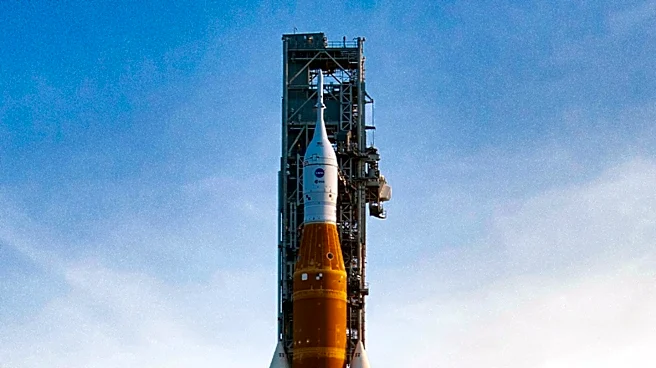
Dr. Suzanne Bell, an organizational psychologist, leads the Behavioral Health and Performance Laboratory at NASA's Johnson Space Center. Her work is crucial in preparing astronauts for the psychological challenges of deep space missions, such as the Artemis
program, which aims to establish a sustained human presence on the Moon and eventually Mars. Dr. Bell's daily routine includes early morning work sessions and data collection from the Artemis II crew, focusing on crew health and readiness. Her research is pivotal as it provides insights into the psychological and behavioral health needs of astronauts venturing beyond low-Earth orbit for the first time in 50 years.
Why It's Important?
The work of Dr. Bell and her team is significant as it addresses the mental health challenges astronauts face during long-duration space missions. As NASA plans to establish a lunar base and eventually send humans to Mars, understanding and mitigating psychological stressors is critical for mission success and crew safety. The research conducted by Dr. Bell's team not only informs the design of future space habitats but also contributes to the development of support systems that ensure astronauts can perform optimally in high-stress environments. This has broader implications for space exploration and the potential for human settlement beyond Earth.
What's Next?
As NASA progresses with the Artemis program, the focus will remain on collecting and analyzing data to refine strategies for maintaining astronaut health and performance. The insights gained from these missions will guide the development of infrastructure and support systems for sustained lunar presence and future Mars expeditions. Continued collaboration between behavioral scientists and engineers will be essential to address the unique challenges of deep space travel, ensuring that astronauts are well-prepared for the psychological demands of these missions.