
What's Happening?
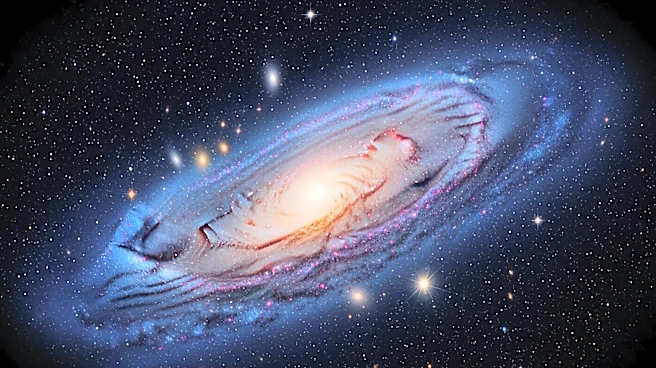
NASA's Hubble Space Telescope has captured a detailed image of the spiral galaxy NGC 3137, located 53 million light-years away in the constellation Antlia. This galaxy is part of a group similar to the Local
Group, which includes the Milky Way. The image reveals the galaxy's structure, including a central black hole and numerous star clusters. The observations are part of the PHANGS-HST program, which aims to study star clusters in nearby galaxies. The data collected will help astronomers understand the life cycle of stars in spiral galaxies.
Why It's Important?
The detailed observations of NGC 3137 provide valuable insights into the dynamics and structure of spiral galaxies, which are similar to our own Milky Way. By studying these galaxies, astronomers can gain a better understanding of stellar formation and evolution. The data from Hubble, combined with observations from other powerful telescopes like the James Webb Space Telescope and ALMA, offer a comprehensive view of star formation processes. This research is crucial for advancing our knowledge of the universe and the fundamental processes that govern galaxy formation and evolution.
What's Next?
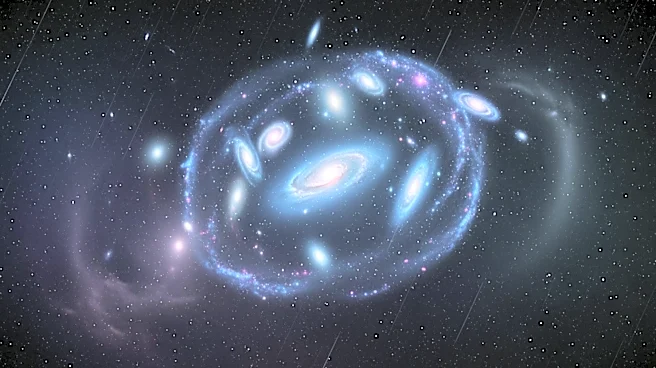
The PHANGS-HST program will continue to observe star clusters in nearby galaxies, providing more data for astronomers to analyze. The collaboration with other observatories will enhance the understanding of star formation and the role of different galactic environments. Future studies may focus on identifying more dwarf galaxies within the NGC 3175 group and exploring their interactions with larger galaxies. These efforts will contribute to a more complete picture of the universe's structure and the forces shaping it.
Beyond the Headlines
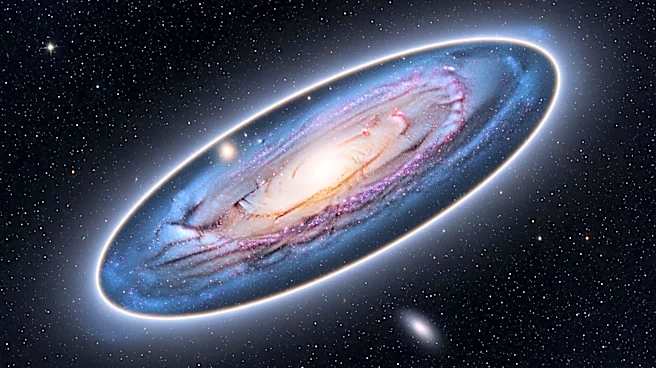
The study of NGC 3137 and similar galaxies could have implications for understanding the potential for life in the universe. By examining the conditions under which stars and planets form, scientists can better assess the likelihood of habitable environments beyond our solar system. Additionally, the research may inform theories about the fate of galaxies, including the eventual merging of the Milky Way with the Andromeda galaxy.