






What's Happening?
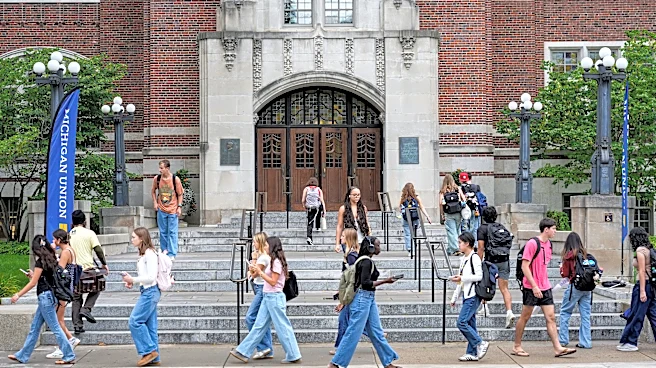
The CHS Communicator has published an article detailing the initial experiences and adjustments of freshmen at Community High School (CHS). The report focuses on how new students are adapting from middle school routines to CHS's block scheduling and open
campus policy. Students like Nathaniel Raz expressed relief and happiness upon acceptance, highlighting the school's 'Forum' system as a key differentiator that fosters social skills and a welcoming environment. Ingrid VanderVliet noted the challenge of transitioning to block scheduling but appreciated the support from CHS staff. Conversely, Alma Birdsong praised the increased freedom, particularly the ability to leave campus for lunch. Callen Hunter-Veatch was surprised by the quiet hallways and is enjoying unique classes like Python, computer science, and ASL, which they hadn't anticipated taking. The article underscores the varied initial impressions, ranging from relief and appreciation for new freedoms to challenges in adapting to different academic structures.
Why It's Important?
This report offers valuable insights into the student integration process within the U.S. education system, particularly at the high school level. The experiences of CHS freshmen reflect broader themes in educational transitions, such as the importance of school culture, administrative support, and curriculum diversity in shaping student success and well-being. The 'Forum' system at CHS, which mixes students from all grade levels, exemplifies an innovative approach to fostering peer connections and mentorship, potentially reducing the social anxieties often associated with starting high school. The students' varied responses to block scheduling and open campus policies highlight the need for schools to consider diverse learning styles and personal preferences when designing academic and social environments. Understanding these initial impressions can help educators and policymakers develop more effective strategies for supporting new students, ultimately contributing to higher retention rates and improved academic outcomes across U.S. high schools.
What's Next?
As freshmen continue their academic year at CHS, ongoing support and adaptation strategies will likely remain crucial. The school administration and faculty may continue to monitor student feedback regarding block scheduling and campus policies to refine their approach. The 'Forum' system will likely continue to play a significant role in integrating new students and fostering a sense of community. Future reports from the CHS Communicator might explore how these initial impressions evolve over time, detailing the long-term impacts of the school's unique structure on student development and academic performance. Additionally, the success stories of students engaging with unexpected courses like Python and ASL could influence curriculum development, potentially leading to the expansion of diverse and specialized learning opportunities for future incoming classes. The school may also consider implementing more structured feedback mechanisms to address transitional challenges proactively.
Beyond the Headlines
The experiences of CHS freshmen touch upon deeper educational and societal implications. The emphasis on 'community' and social skill development through the 'Forum' system reflects a growing recognition within U.S. education of the importance of holistic student development beyond academic achievement. This approach can contribute to building more resilient and socially adept individuals, which is vital for future civic engagement and professional success. The students' appreciation for increased freedom and diverse course offerings also highlights a shift towards personalized learning and student agency, moving away from more rigid, traditional educational models. This trend could influence broader educational reforms, encouraging schools to offer more flexible schedules and a wider array of specialized subjects. Ultimately, the CHS experience serves as a microcosm for the ongoing evolution of U.S. high school education, balancing academic rigor with social-emotional learning and student autonomy.