



What's Happening?
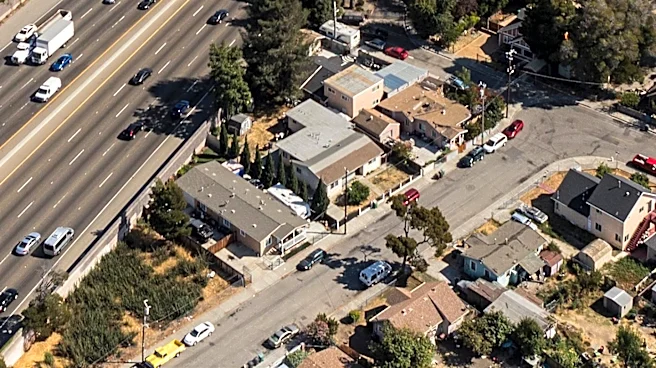
El Paso city staff and aides from U.S. Rep. Veronica Escobar’s office recently met with residents of Futureland, a Northeast El Paso neighborhood, to assess infrastructure needs. This visit is an initial step in potentially seeking federal Community Project
Funding to address long-standing issues such as unpaved roads, lack of streetlights, and absence of public sewer service. Omar Martinez, assistant director of the city’s Strategic and Legislative Affairs Department, indicated that this process involves observing and documenting the community's needs to build a potential application. The city estimates its portion of the work, including streets and sidewalks, could cost around $50 million, suggesting that improvements would likely be phased due to the significant expense. Residents have expressed frustration, questioning why a neighborhood within city limits for decades still requires external funding for basic amenities.
Why It's Important?
The pursuit of federal funding for Futureland highlights a broader challenge faced by many communities across the U.S. where existing infrastructure is inadequate or outdated. This initiative underscores the reliance of local governments on federal programs to finance large-scale public works projects, especially when local budgets are insufficient. For the residents of Futureland, securing this funding would mean access to essential services that are standard in other parts of El Paso, improving their quality of life and potentially increasing property values. The situation also brings to light the disparities in urban development and the ongoing struggle for equitable access to public services within city boundaries. The estimated $50 million cost for just a portion of the work illustrates the substantial financial burden associated with modernizing infrastructure in underserved areas.
What's Next?
The next steps involve the city of El Paso preparing a Community Project Funding application, which would require City Council approval before submission to Representative Escobar’s office. The city also needs to identify its own funding contributions to support the project. Given the substantial cost, improvements are expected to be implemented in phases, potentially over several years. Residents, while welcoming federal assistance, continue to advocate for their needs, with the Futureland Neighborhood Association Chair, Leslie Canada, emphasizing the desire for amenities available to other El Paso citizens. El Paso Water's previously scheduled wastewater project for Futureland in 2030 may be re-evaluated, as residents and city officials push for an accelerated timeline for sewer service installation.
Beyond the Headlines
This situation in Futureland reflects a deeper systemic issue concerning urban planning and equitable resource distribution within municipalities. The fact that a neighborhood within city limits for decades lacks basic infrastructure raises questions about historical development priorities and the allocation of local tax revenues. It also highlights the role of federal funding as a critical, yet often complex, mechanism for addressing these disparities. The community's persistent advocacy underscores the importance of civic engagement in driving change and holding local governments accountable for providing essential services. The phased approach to improvements, while practical, also means a prolonged wait for residents, emphasizing the long-term commitment required to rectify such infrastructure deficits.