






What's Happening?
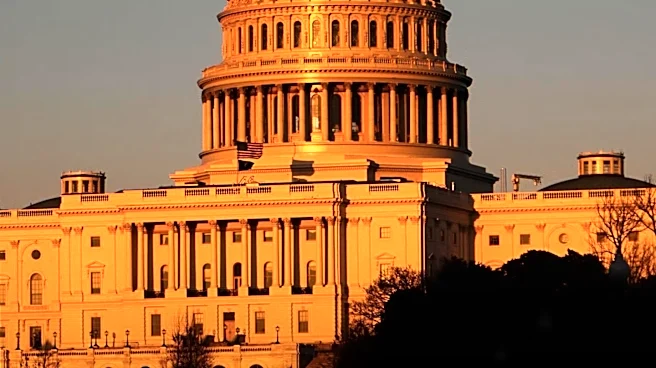
Congresswoman Nikki Budzinski, alongside Senator Martin Heinrich and Representative Paul Tonko, has introduced the Good Energy Jobs Act. This proposed legislation aims to codify the labor and community benefits requirements established by the Biden administration.
The bill seeks to embed high-road labor standards and broad-based community benefits into clean energy projects, particularly through project labor agreements and community benefits agreements. This initiative is part of a broader effort to ensure that the transition to clean energy also supports working people and local communities. Data for Progress polling indicates strong bipartisan support for the Good Energy Jobs Act, with 80% of voters, including 80% of Democrats, 82% of Independents, and 79% of Republicans, expressing support when informed about its provisions. This suggests a widespread desire for policies that link clean energy development with equitable labor practices and community investment.
Why It's Important?
The Good Energy Jobs Act is significant because it seeks to formalize and make permanent the labor and community protections within the clean energy sector. Currently, many of these provisions are administrative, meaning they could be easily reversed by future administrations. By codifying these requirements into law, the act would provide greater stability and certainty for workers, unions, and communities involved in clean energy projects. This is crucial for ensuring that the economic benefits of the clean energy transition are widely shared, preventing a race to the bottom in labor standards. It also addresses concerns that clean energy development could bypass local workforces or fail to adequately invest in the communities hosting these projects. The bipartisan support highlighted in the polling suggests that this approach resonates across the political spectrum, indicating a potential for long-term impact on how energy infrastructure is developed and how its benefits are distributed across the U.S.
What's Next?
The next step for the Good Energy Jobs Act will be its progression through the legislative process in the U.S. Congress. Given the reported bipartisan support, the bill may have a favorable path, though legislative timelines can be unpredictable. Advocates will likely continue to push for its passage, emphasizing the economic and social benefits of codifying labor and community standards in clean energy. If passed, the act would establish a more robust framework for future clean energy projects, potentially influencing investment decisions and job creation in the sector. Conversely, if it faces significant opposition or fails to pass, the existing administrative requirements would remain vulnerable to future policy changes, leaving the long-term stability of labor and community benefits in the clean energy transition uncertain.
Beyond the Headlines
Beyond its immediate legislative impact, the Good Energy Jobs Act reflects a growing recognition of the need to integrate social equity and economic justice into environmental policy. This approach challenges the traditional view that environmental protection and economic growth are inherently at odds, instead proposing a model where they are mutually reinforcing. The act's emphasis on codifying benefits suggests a shift towards a more holistic understanding of sustainability, one that includes not only ecological health but also the well-being of workers and communities. This could set a precedent for future legislation across various sectors, promoting a broader framework for 'just transitions' that address both environmental and social challenges simultaneously. The strong public support for such measures also indicates a potential for increased public engagement and demand for corporate accountability in large-scale infrastructure projects.