





What's Happening?
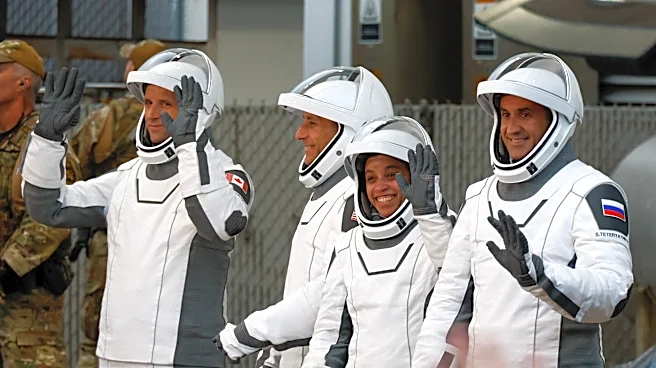
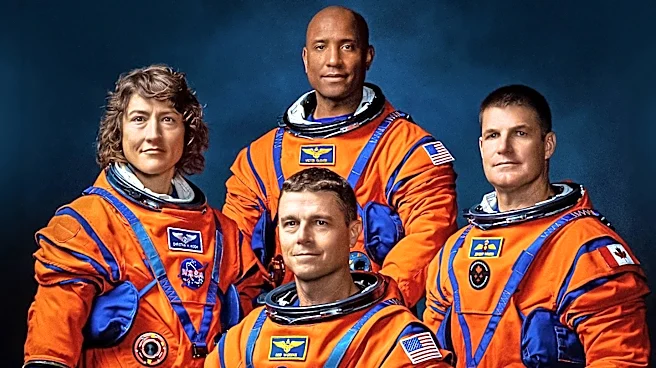
NASA's Artemis Research for Crew Health and Readiness study is providing significant insights into how sleep and circadian rhythms are affected by space travel. The study, which involves astronauts wearing wrist-mounted movement and sleep monitors before,
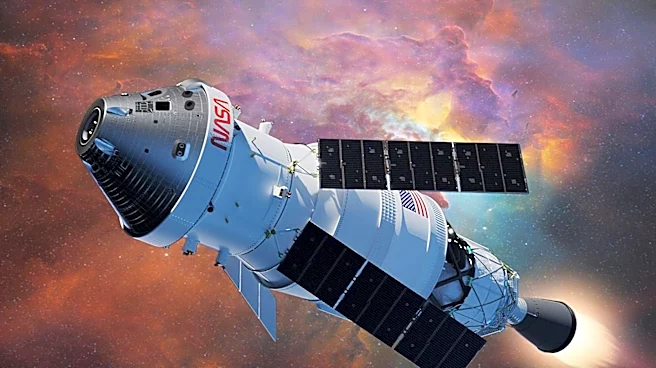
during, and after missions like Artemis II, tracks changes in sleep and activity alongside measurements of cognition, behavior, and team performance. A key finding is that while astronauts may feel exhausted after long periods awake, their circadian system can signal it is still 'daytime,' making it difficult to sleep. This highlights that feeling tired and being biologically ready for sleep are not always aligned. Spacecraft environments, where astronauts experience 16 sunrises and sunsets every 24 hours, disrupt the natural light cues that typically synchronize the human circadian clock on Earth. The research emphasizes that sleep is not merely a response to fatigue but is heavily dependent on precise timing, a distinction crucial for understanding human biology in extreme environments.
Why It's Important?
This research is vital for ensuring the health, safety, and performance of U.S. astronauts on long-duration space missions, including future endeavors to Mars. Chronic sleep restriction, observed in astronauts who often get only 6 to 6.5 hours of sleep despite 8.5 hours of opportunity, has been linked to measurable reductions in vigilant attention. In the high-stakes environment of spaceflight, a missed signal due to impaired attention could have severe consequences for mission safety. The findings also have broader implications for understanding human sleep and circadian rhythms on Earth, particularly for individuals in professions with disrupted schedules, such as shift workers or those experiencing jet lag. By revealing the fundamental role of timing in sleep, NASA's study can inform strategies for optimizing sleep and performance not only for astronauts but also for the general population, potentially leading to improved health outcomes and productivity in various demanding fields.
What's Next?
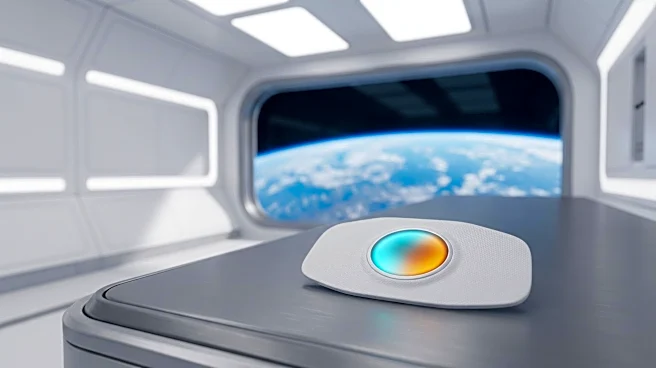
NASA is actively testing methods to counteract sleep disruption in space. This includes carefully guiding astronaut schedules around exercise, meals, tailored lighting, and work scheduling. Artificial lighting is being controlled to provide more appropriate environmental cues, with blue-enriched white light used to support alertness and synchronize the circadian clock during waking hours, and dimmer, blue-depleted light to prepare for sleep. However, this presents engineering trade-offs, as pre-sleep lighting that benefits the circadian system may impair color discrimination, which is critical for identifying controls and warning signals. Future research will also address the challenge of adapting to non-Earth days, such as the Martian 'sol' which is 40 minutes longer than an Earth day. NASA's ongoing Mars simulations, like the CHAPEA mission, are already transitioning crews to Martian time to study the persistent scheduling problems this presents for the human circadian system.
Beyond the Headlines
The insights from NASA's Artemis research extend beyond immediate mission safety, touching upon the fundamental understanding of human biology and adaptation. The distinction between feeling tired and being biologically ready for sleep underscores the complex interplay of the circadian clock and sleep pressure. This research highlights the ethical considerations of human exploration in environments that fundamentally alter natural biological rhythms. It also prompts deeper questions about the long-term effects of chronic circadian misalignment on human health, potentially informing preventative measures for a range of conditions on Earth. The challenges of optimizing lighting for both circadian health and operational tasks in space reveal the intricate balance required in designing future habitats and spacecraft, pushing the boundaries of bio-engineering and environmental control systems. Ultimately, this research contributes to a broader scientific understanding of how humans can thrive in environments vastly different from the one in which they evolved.