





What's Happening?
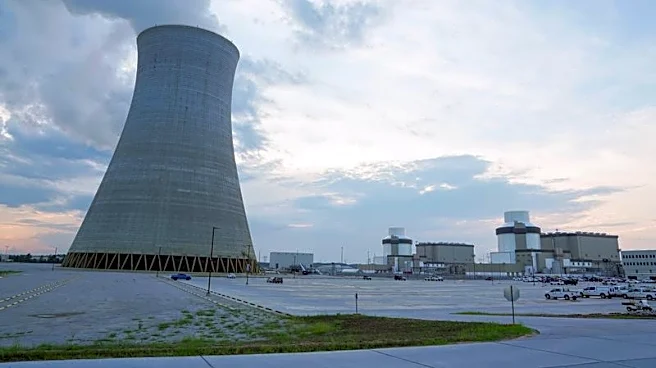
A recent report alleges that Pacific Gas & Electric (PG&E) is overcharging customers to maintain operations at the Diablo Canyon Power Plant, California's last remaining nuclear facility. The report, released by UC Santa Barbara's 2035 Initiative, claims
that PG&E inflated costs when requesting a $1.4 billion loan from the state to extend the plant's operation until 2030. This extension was initially granted to prevent potential power shortages, as Diablo Canyon supplies over 8% of the state's electricity. The report suggests that PG&E's cost inflation could result in a $685.6 million shortfall in loan repayment, potentially burdening taxpayers unless legislative action is taken. Additionally, the report criticizes the necessity of certain ratepayer fees, arguing that without them, the plant could still operate profitably by selling electricity alone.
Why It's Important?
The allegations against PG&E have significant implications for California's energy policy and financial oversight. If the report's claims are accurate, taxpayers could face substantial financial burdens due to the inflated costs and unnecessary fees. This situation raises concerns about the transparency and accountability of utility companies in managing public funds and resources. Moreover, the controversy highlights the broader issue of energy affordability, especially during periods of extreme weather when electricity demand spikes. The outcome of this situation could influence future regulatory measures and public trust in utility companies, potentially affecting energy policy and consumer protection laws in California and beyond.
What's Next?
The report's findings may prompt legislative scrutiny and potential reforms in how utility companies like PG&E are regulated, particularly concerning financial transparency and accountability. Lawmakers might consider revising the terms of the loan and associated fees to ensure that the financial burden does not fall on taxpayers. Additionally, there could be increased advocacy for alternative energy solutions and efficiency programs that could mitigate the need for such costly extensions. The public and consumer advocacy groups are likely to demand more rigorous oversight and possibly push for legislative changes to prevent similar situations in the future.
Beyond the Headlines
The situation with PG&E and Diablo Canyon underscores the complex interplay between energy policy, environmental concerns, and economic interests. While nuclear power is a low-carbon energy source, the financial and operational management of such facilities can have far-reaching implications for public trust and policy. This case may also influence the national conversation on nuclear energy's role in achieving climate goals, balancing the need for clean energy with the necessity of financial and operational transparency.