
What's Happening?
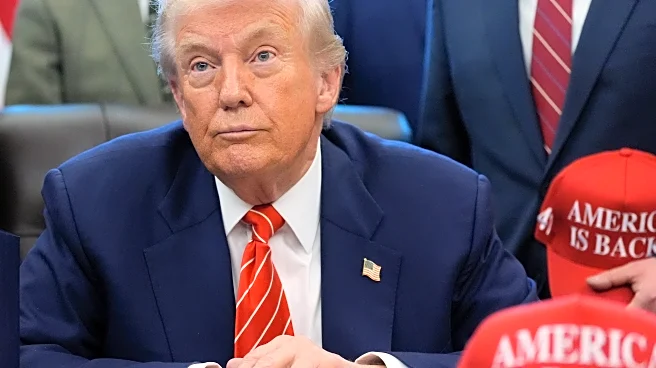
President Trump has expressed a strong interest in bringing Greenland under U.S. control, citing its strategic location and rich mineral resources as key factors. Greenland, a semi-autonomous territory
of Denmark, is strategically positioned between North America, Europe, and Russia, making it vital for defense and trade. The melting Arctic ice has opened new shipping routes, increasing Greenland's importance. The U.S. already has a military base on the island, and Trump argues that control over Greenland is necessary for national security. However, both Denmark and Greenland oppose this move, emphasizing their sovereignty and the right to self-determination.
Why It's Important?
Greenland's strategic location and resources are critical for U.S. national security and economic interests. The island's mineral wealth, including rare earth elements, is essential for modern technology and reducing reliance on China. Control over Greenland would also enhance U.S. influence in the Arctic, countering Russian and Chinese activities in the region. However, the push for control has strained relations with Denmark and raised concerns about sovereignty and international law. The situation highlights the geopolitical complexities of the Arctic and the challenges of balancing national interests with international cooperation.
What's Next?
Greenland's leaders and the Danish government continue to resist U.S. efforts to assert control over the island. The situation may lead to increased diplomatic negotiations or further tensions, depending on how the involved parties address issues of sovereignty and security. The U.S. is likely to continue its strategic focus on Greenland, seeking ways to collaborate with Denmark and Greenland while pursuing its national interests. The outcome could have significant implications for Arctic security and international relations.