
What's Happening?
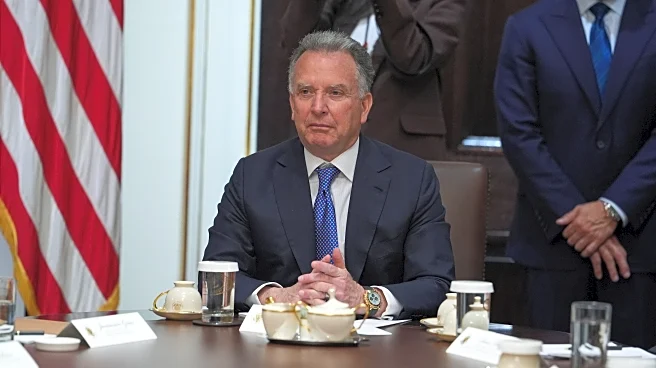
The U.S. envoy Steve Witkoff announced the launch of phase two of President Trump's plan for the Gaza Strip, which aims to dismantle Hamas and demilitarize the region. However, the announcement did not
address the opening of the Rafah crossing, a critical point for Israel in securing the return of Sgt. First Class Ran Gvili's body. Israeli officials are preparing for potential military action if Hamas does not disarm voluntarily. The plan includes establishing a Palestinian technocratic administration in Gaza, separate from Hamas and the Palestinian Authority, and the creation of an international stabilization force. Prime Minister Netanyahu emphasized the importance of returning Gvili's body and stated that the Rafah crossing remains closed due to this priority.
Why It's Important?
The announcement of phase two is significant as it represents a shift from ceasefire to active demilitarization and governance restructuring in Gaza. This move could impact regional stability and the balance of power between Israel and Palestinian factions. The involvement of an international stabilization force indicates a broader international commitment to resolving the conflict. However, the lack of clarity on the Rafah crossing and the return of Gvili's body could lead to renewed tensions and military actions. The plan's success or failure could influence U.S.-Israel relations and the broader Middle East peace process.
What's Next?
Israel is likely to continue its preparations for military action if Hamas does not comply with disarmament demands. The establishment of the Palestinian technocratic administration and the international stabilization force will be closely monitored by regional and international stakeholders. The U.S. and Israel will need to navigate diplomatic channels to ensure the plan's implementation and address any arising conflicts. The situation remains fluid, with potential for both diplomatic breakthroughs and escalations in violence.