







What's Happening?
Emma Heming Willis, wife of actor Bruce Willis, has spoken out about the profound emotional challenges she faces as a caregiver for her husband, who was diagnosed with frontotemporal dementia (FTD). In an interview, Heming Willis described her experience
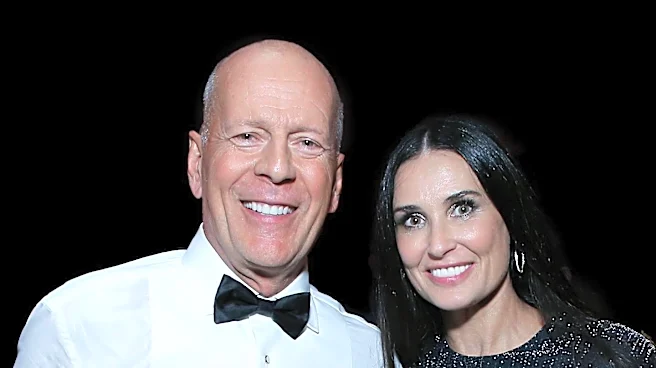
as a 'constant state of grief' and highlighted the difficulty of navigating the illness while raising their two daughters, Mabel, 14, and Evelyn, 12. She emphasized that FTD is distinct from Alzheimer's disease, affecting different parts of the brain and leading to changes in behavior, personality, language, and movement. Heming Willis also addressed the misconception that Bruce Willis no longer recognizes her, clarifying that he does not have Alzheimer's. The family, including Bruce Willis's ex-wife Demi Moore and their three adult daughters Rumer, Scout, and Tallulah, remains a strong support system, with each member contributing to his care in their unique way. Heming Willis has also launched the Emma & Bruce Willis Fund to raise awareness, support caregivers, and fund research for FTD.
Why It's Important?
This public discussion by Emma Heming Willis is important for several reasons. Firstly, it sheds light on the often-overlooked emotional and practical struggles faced by caregivers of individuals with neurodegenerative diseases like FTD. Her candidness helps to destigmatize the caregiving experience and can provide solace and validation to others in similar situations. Secondly, her efforts to differentiate FTD from Alzheimer's disease are crucial for public education. Misinformation surrounding dementia types can lead to misunderstandings and inadequate support for patients and their families. By clarifying the specific nature of FTD, Heming Willis contributes to a more informed public discourse, which can ultimately lead to better diagnostic practices, more targeted research, and improved care strategies. The involvement of the entire blended family, including Demi Moore, also highlights the importance of a strong support network in managing long-term illness, demonstrating a unified approach to care that transcends traditional family structures.
What's Next?
Emma Heming Willis is expected to continue her advocacy work through the Emma & Bruce Willis Fund, aiming to increase awareness, support caregivers, and fund research for frontotemporal dementia. Her book, 'The Unexpected Journey: Finding Strength, Hope and Yourself on the Caregiving Path,' will likely continue to serve as a resource for other caregivers. The family's ongoing public sharing of their experiences may encourage more open conversations about FTD and caregiving challenges. Additionally, the increased public awareness could lead to greater support for FTD research initiatives and potentially influence healthcare policies to better address the needs of FTD patients and their families. The continued involvement of Bruce Willis's ex-wife Demi Moore and his five daughters in his care underscores a sustained family commitment, which may inspire other families facing similar circumstances.
Beyond the Headlines
Beyond the immediate impact of raising awareness for FTD, Emma Heming Willis's narrative touches upon deeper societal implications regarding caregiving, family dynamics, and public perception of illness. Her honesty about feeling 'broken on the floor' despite her public strength challenges the often-unrealistic expectations placed on caregivers, particularly those in the public eye. This vulnerability can foster a more empathetic understanding of the human toll of chronic illness. Furthermore, the seamless integration of Bruce Willis's ex-wife Demi Moore and their daughters into the caregiving network offers a powerful example of modern family structures adapting to crisis, emphasizing love and support over conventional boundaries. This could subtly shift cultural norms around blended families and co-parenting in challenging circumstances. Her call for accurate media reporting on different types of dementia also highlights the broader ethical responsibility of media to educate rather than sensationalize, contributing to a more informed and less stigmatized public understanding of complex health conditions.