



What's Happening?
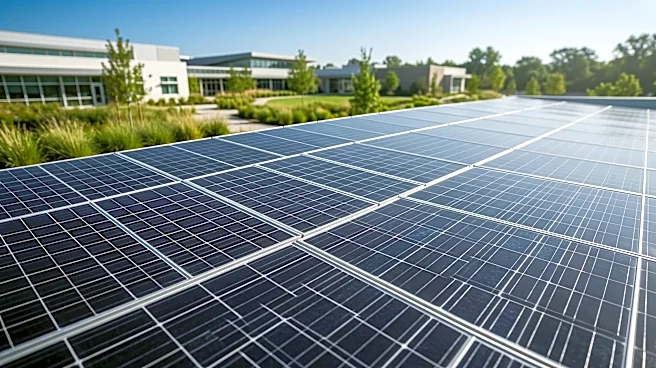
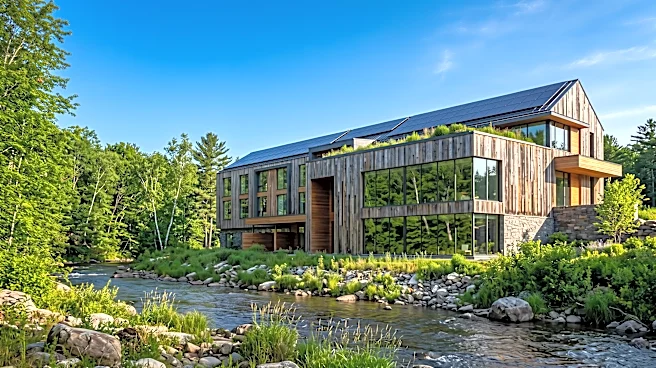
The town of Amherst anticipates receiving significant federal tax credits for the sustainability features incorporated into its new elementary school project. Specifically, the town expects approximately $1 million for the photovoltaic (solar) system
and between $2 million and $3 million for the geothermal system. These credits will be provided as direct payments to the town and will be deposited into the capital stabilization fund. The final amounts are pending the completion of the application process, expected after July 2027, and the Internal Revenue Service's response, anticipated in November 2027. The actual receipt of these payments is projected for early 2028. Additionally, the town has already received $1,291,500 from Eversource as an incentive for meeting MassSAVES construction requirements and expects another $168,625 in operating incentives.
Why It's Important?
This development is significant for several reasons. Firstly, it demonstrates how federal tax incentives can directly support public infrastructure projects focused on sustainability, providing substantial financial benefits to municipalities. The anticipated $3 million to $4 million in federal tax credits, combined with state-level incentives, will help offset the town's borrowing for the school project, potentially reducing the burden on local taxpayers. This model could encourage other municipalities to invest in similar green technologies for public buildings, accelerating the adoption of renewable energy and energy efficiency across the country. The direct payment mechanism for these credits is particularly beneficial for non-profit entities like municipalities, which cannot directly utilize traditional tax credits. This approach ensures that the financial advantages of federal clean energy policies are accessible to a broader range of public sector projects, fostering a more sustainable and energy-independent future for communities.
What's Next?
The town of Amherst will proceed with the application process for the federal tax credits, with final amounts to be determined after July 2027 and IRS review by November 2027. The direct payments are expected in early 2028, which will then be allocated to the capital stabilization fund. The Elementary School Building Committee will transition to meeting every other month, delegating invoice approvals to town staff while still receiving expense presentations. The town also awaits an additional $168,625 in operating incentives from Eversource, contingent on demonstrating 12 consecutive months at an Energy Use Intensity (EUI) of no more than 25. These financial inflows will contribute to the long-term fiscal health of the town and support its commitment to sustainable infrastructure.
Beyond the Headlines
The Amherst elementary school project serves as a compelling case study for the effective integration of renewable energy and energy efficiency in public infrastructure. The substantial federal and state incentives highlight the critical role of government policy in de-risking and incentivizing such investments. This project not only provides a modern educational facility but also acts as a living laboratory for sustainable practices, potentially inspiring future generations and demonstrating the economic viability of green building. The direct payment mechanism for tax credits is a crucial innovation, addressing a long-standing barrier for public and non-profit entities in accessing federal clean energy incentives. This approach could become a blueprint for future federal programs, ensuring that all sectors, not just private businesses, can participate in and benefit from the clean energy transition, thereby fostering broader societal impact and environmental stewardship.