





What's Happening?
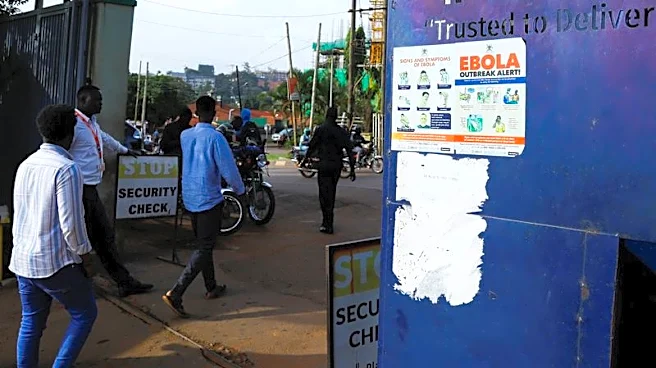
The Canadian government has announced that travelers arriving from regions affected by the Ebola outbreak, specifically Congo, Sudan, and Uganda, will be required to self-isolate for 21 days. This measure, announced by Luc Brisebois, director-general
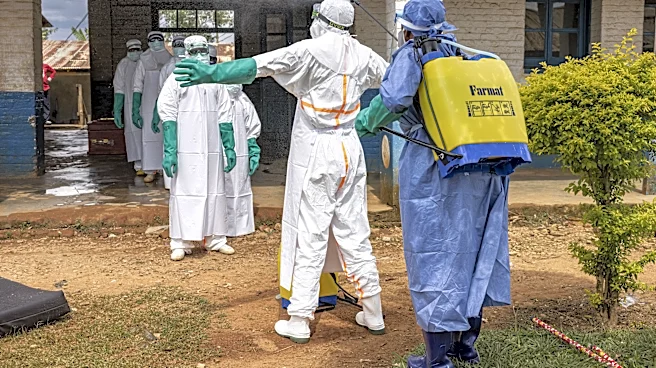
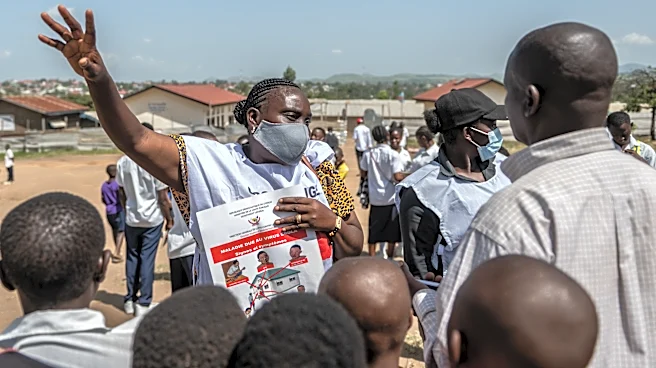
for the Centre for Border and Travel Health at the Public Health Agency of Canada, is being implemented as a precautionary step and will remain in effect until August 29. Additionally, Canadian immigration authorities are temporarily suspending decisions on applications from these countries for 90 days, with the possibility of extension depending on the outbreak's progression. The World Health Organization has reported that the outbreak, centered in northeastern Congo, involves a rare strain of Ebola that is spreading rapidly, with over 900 suspected cases and more than 220 deaths. The Canadian government is also providing isolation facilities for travelers who do not have a place to self-isolate.
Why It's Important?
The Canadian government's decision to enforce self-isolation and suspend immigration applications from Ebola-affected regions underscores the seriousness of the outbreak and its potential global health implications. By implementing these measures, Canada aims to prevent the spread of Ebola within its borders, protecting public health and safety. The outbreak's rapid spread and high mortality rate highlight the challenges faced by international health organizations in containing the virus. This situation also emphasizes the need for robust global health responses and cooperation to manage and mitigate the impact of such infectious diseases. The suspension of immigration applications could have significant implications for individuals from the affected regions seeking to enter Canada, potentially affecting family reunifications and other immigration processes.
What's Next?
The Canadian government will continue to monitor the Ebola outbreak closely, with the possibility of extending or lifting the self-isolation and immigration suspension measures based on the situation's evolution. Health authorities will likely increase their efforts to support international aid and response initiatives aimed at controlling the outbreak. The World Health Organization and other global health entities are expected to intensify their efforts to contain the virus, which may include deploying additional resources and personnel to the affected regions. The situation may also prompt other countries to implement similar precautionary measures to prevent the spread of Ebola across borders.