
What's Happening?
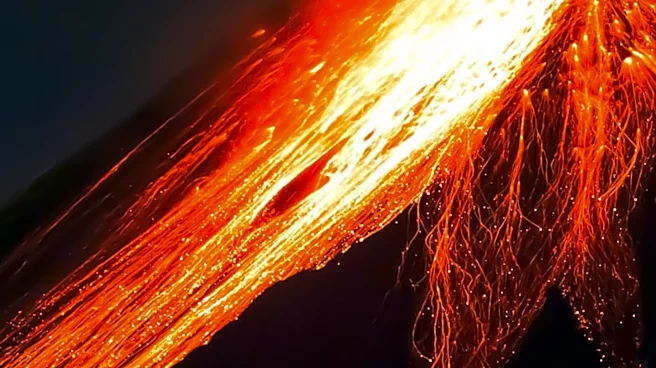
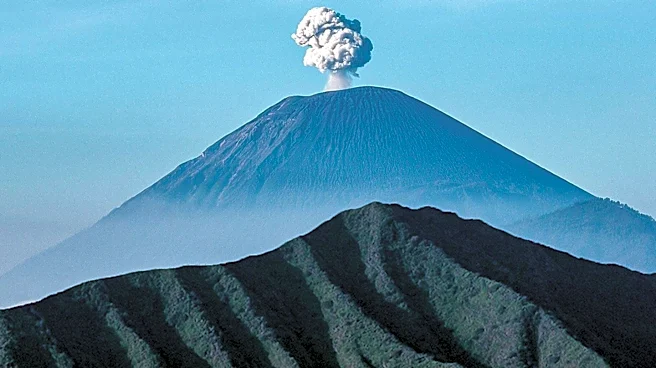
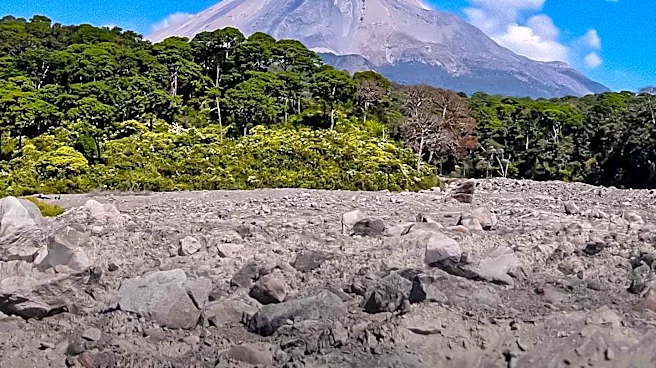
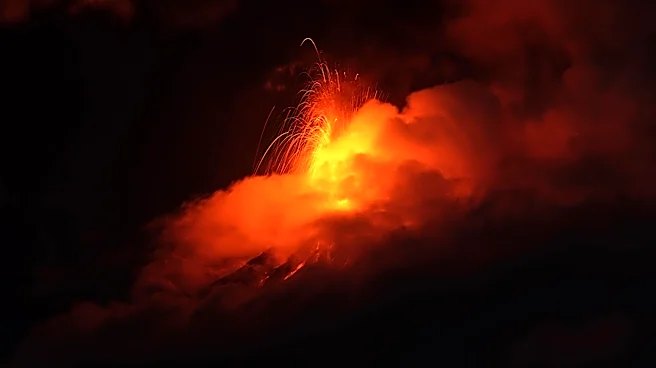
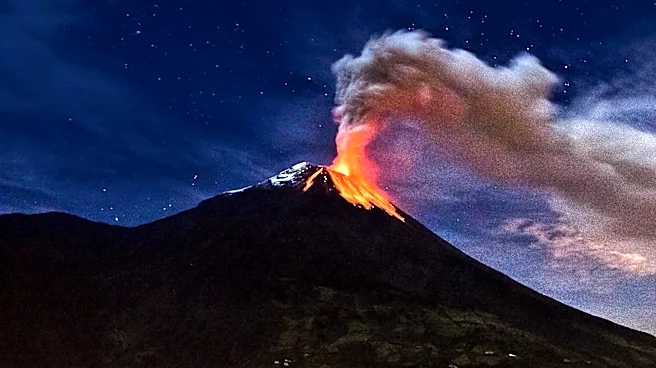
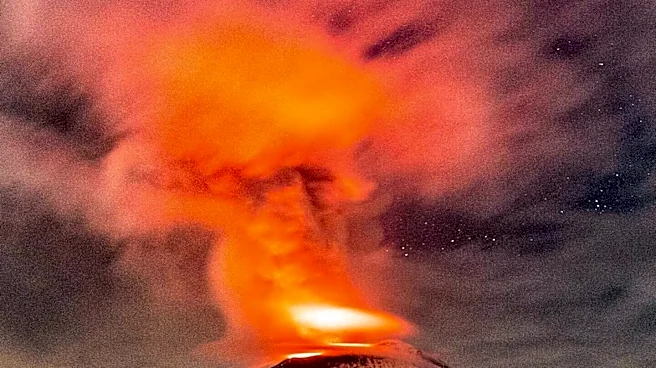
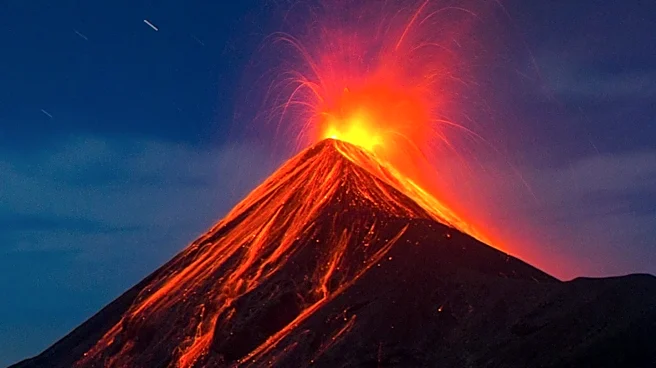
The Fuego volcano in Guatemala erupted, prompting the evacuation of approximately 1,700 people. The eruption, which began on Monday, has led to the emission of gas, ash, and lava, with mudflows descending from the volcano. The country's disaster agency,
Conred, has issued a red alert for three municipalities, affecting around 29,000 people. Schools have been closed, and a major highway near the volcano has been shut down. The next 72 hours are critical as forecasted rain could exacerbate mudflows.
Why It's Important?
Guatemala's location on the Pacific 'Ring of Fire' makes it susceptible to frequent volcanic activity, posing significant risks to local communities. The current eruption highlights the ongoing threat of natural disasters in the region and the need for effective emergency response and evacuation plans. The disruption to infrastructure and daily life underscores the broader challenges faced by countries in managing volcanic hazards. The situation also raises concerns about the long-term impacts on local economies and the environment.
What's Next?
Authorities will continue to monitor the situation closely, with the potential for further evacuations if conditions worsen. Efforts will focus on ensuring the safety of affected communities and minimizing damage to infrastructure. The government may also need to address the longer-term needs of displaced residents, including housing and economic support. International aid and collaboration may be sought to assist in recovery efforts and improve future disaster preparedness.