






What's Happening?
The Trump administration, with assistance from Elon Musk, undertook a significant reduction of the federal workforce, including personnel at the Consumer Financial Protection Bureau (CFPB). This action, based on what the source describes as 'vibes and
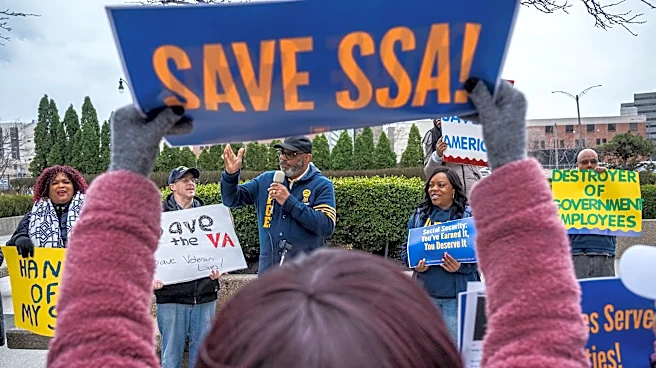
malice,' resulted in thousands of federal workers being fired. However, the administration subsequently found itself in a position where it had to request many of these recently terminated employees to return to their positions. This mass firing initiative also extended to other areas, such as the Department of Government Efficiency, and was accompanied by policies like the shutdown of 110 driving schools due to a lack of 'English proficiency,' as announced by Transportation Secretary Sean Duffy. The overall approach has been characterized as detrimental to the labor movement and working people.
Why It's Important?
The mass firings within the federal workforce, particularly at agencies like the CFPB, have significant implications for government functionality and consumer protection. The CFPB is crucial for safeguarding consumers in financial transactions, and disruptions to its staffing can weaken its ability to perform this role effectively. The need to rehire previously fired workers indicates a lack of foresight and planning, potentially leading to operational inefficiencies and instability within government agencies. Furthermore, the administration's broader labor policies, including actions against immigrant truck drivers and the general approach to federal employees, suggest a systemic impact on labor rights and the stability of the federal civil service. This could undermine public trust in government institutions and their capacity to deliver essential services.
What's Next?
The long-term consequences of these federal workforce reductions and subsequent rehirings are likely to include continued scrutiny of government efficiency and labor policies. Future administrations may need to address the morale and stability of the federal workforce, potentially through new hiring initiatives or policy changes aimed at strengthening civil service protections. The impact on specific agencies like the CFPB could necessitate efforts to rebuild institutional knowledge and operational capacity. Additionally, the political discourse surrounding labor rights and the role of federal employees is expected to remain a prominent issue, influencing future legislative and executive actions related to government employment and consumer protection.
Beyond the Headlines
The events highlight a deeper tension between political agendas and the practical realities of government administration. The decision to fire thousands of federal workers, only to later beg them to return, underscores a potential disconnect between policy objectives and their operational feasibility. This approach raises questions about the value placed on institutional expertise and continuity within government. Ethically, the 'vibes and malice' described as the basis for these firings suggest a disregard for due process and employee welfare. Culturally, such actions can foster an environment of uncertainty and fear among federal employees, potentially impacting their willingness to serve and their overall productivity. The broader implications touch upon the integrity of public service and the stability of democratic institutions.