






What's Happening?
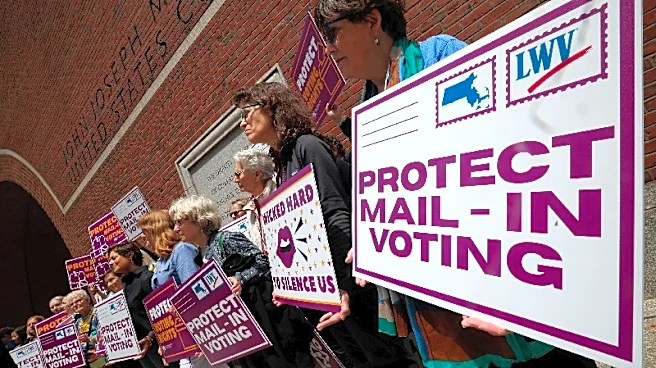
A federal judge in Sioux Falls is currently reviewing a lawsuit against South Dakota Secretary of State Monae Johnson and the state Board of Elections. The lawsuit, filed by the League of Women Voters and Sioux Falls resident Jaysen Hill, alleges that
the state is violating the U.S. Constitution by sending misleading notification letters to voters registered as 'federal-only.' These letters, sent by county auditors under the Secretary of State's guidance, primarily cite mail-forwarding address issues as the reason for federal-only status, even when the actual reason is a failure to provide citizenship documentation. American Civil Liberties Union attorney William Hancock, representing the League, argues that these letters are inaccurate, misleading, and violate the due process rights guaranteed by the 14th Amendment, which requires accurate information and a means to respond. The lawsuit seeks to compel the state to accept photocopies of certain IDs for voter registration, rescind guidance requiring in-person registration for those using such IDs, provide accurate explanations for federal-only designations, and offer voters an opportunity to challenge this status. The judge heard oral arguments and is expected to issue a decision next week.
Why It's Important?
This lawsuit has significant implications for voting rights and election integrity in South Dakota. The state's law, enacted in March, requires proof of citizenship for new voter registrations, leading to 'federal-only' ballots for those who don't provide it, limiting their participation to federal elections. The alleged misleading nature of the notification letters could disenfranchise voters by failing to inform them accurately about their registration status and how to rectify it. The League of Women Voters claims the letters have forced them to scale back voter registration drives because volunteers cannot reliably explain the federal-only designation or how to fix it. This situation highlights a broader concern about the clarity and accessibility of voter registration processes, potentially impacting voter turnout and trust in the electoral system. The outcome of this case could set a precedent for how states communicate with voters regarding registration requirements and status, particularly concerning citizenship verification.
What's Next?
A federal judge is expected to release a decision next week regarding the lawsuit against South Dakota Secretary of State Monae Johnson. This decision will determine whether the state must revise its notification letters to voters registered as federal-only, providing more accurate and comprehensive information about their status and the steps required to change it. If the court rules in favor of the plaintiffs, the Secretary of State's Office would likely be mandated to implement changes to its voter communication protocols before the November 3 general election, which Hancock noted the office intends to do, but not until after the election. This could involve creating new, specific notification letters for different reasons for federal-only designation and outlining clear remedies. Conversely, if the court sides with the state, the current notification practices may continue, potentially leading to further legal challenges or continued efforts by voting rights organizations to educate voters independently.
Beyond the Headlines
The legal challenge in South Dakota extends beyond the immediate issue of notification letters, touching upon fundamental aspects of democratic participation and the role of state election officials. The dispute over whether the Secretary of State or county auditors are the proper defendants highlights the complex administrative structure of elections and the potential for accountability gaps. Furthermore, the case underscores the ongoing national debate surrounding voter identification laws and proof of citizenship requirements, which critics argue disproportionately affect certain demographics and can create barriers to voting. The League of Women Voters' struggle to conduct voter registration drives effectively due to the confusing letters illustrates how administrative details can have a chilling effect on civic engagement. This case could influence how other states approach voter communication and the implementation of similar election laws, emphasizing the need for transparency and clarity in all aspects of the electoral process to uphold the principles of due process and equal access to the ballot.