







What's Happening?
A historic A. Quincy Jones-designed house, known as the Gelb House, has been listed for sale at $2.7 million in Los Angeles. Built in 1950 as part of the Mutual Housing Tract project, the house is one of the few remaining examples of mid-century modern
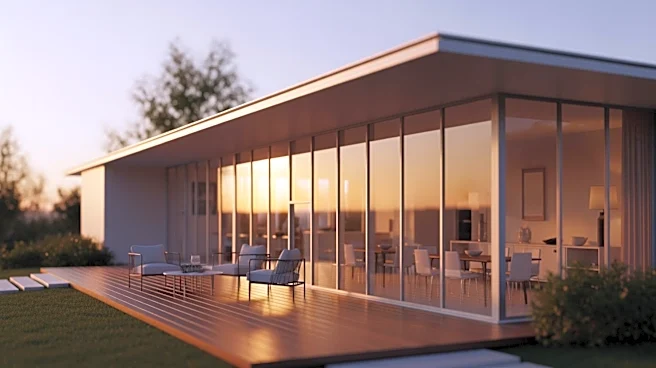
architecture in the Crestwood Hills area. Originally constructed for Morris and Lydia Gelb, the home remained in their family until 2010 when it was purchased by architect Bruce Norelius and his partner Landis Green. The pair renovated the house in 2014, preserving its original design while updating its systems. The three-bedroom home features a mix of plate glass, concrete block, and redwood paneling, and is situated on a 0.32-acre lot with mature eucalyptus trees.
Why It's Important?
The listing of the Gelb House highlights the enduring appeal and historical significance of mid-century modern architecture in Los Angeles. Homes designed by A. Quincy Jones are highly sought after for their aesthetic and functional design, which emphasizes indoor-outdoor living and simplicity. The preservation and sale of such properties contribute to the cultural heritage of the city and offer insight into post-war housing solutions. The Gelb House's listing at $2.7 million reflects the high value placed on architectural history and the demand for unique homes in affluent neighborhoods like Brentwood.
What's Next?
Potential buyers interested in the Gelb House may consider its historical significance and architectural pedigree as key factors in their decision. The property offers opportunities for further development, such as adding a pool or accessory dwelling unit (ADU), which could enhance its value. As the real estate market continues to evolve, the sale of such historic homes may influence trends in property values and preservation efforts in Los Angeles.
Beyond the Headlines
The Gelb House is part of a broader narrative of post-war communal housing projects that aimed to address housing shortages. The Mutual Housing Tract project, although not fully realized, represents an important chapter in the history of urban planning and community development. The preservation of homes like the Gelb House serves as a reminder of the innovative approaches to housing that emerged in the mid-20th century, and their lasting impact on architectural design.