





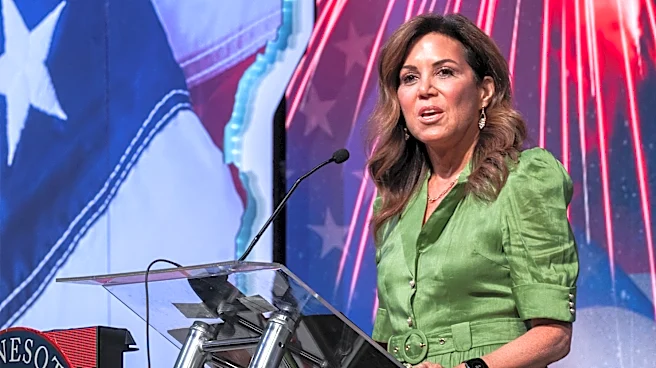

What's Happening?
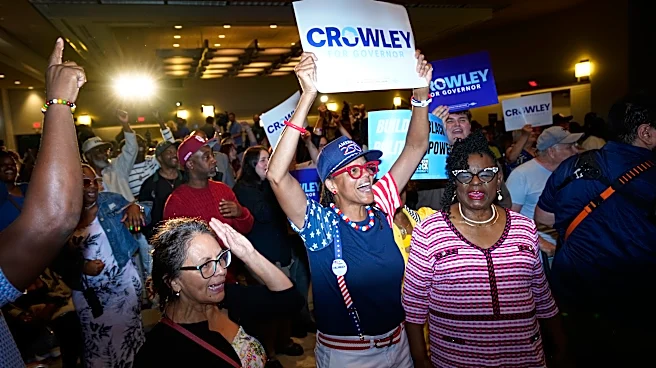
Recent Democratic primaries have seen significant victories for candidates representing diverse groups, including LGBTQ+, women, and workers. This trend is part of a broader political shift as Democrats aim to secure majorities in Congress amidst declining
approval ratings for President Trump. The primaries have highlighted the growing influence of Democratic Socialists, with candidates like Lt. Gov. Peggy Flanagan gaining traction. However, the party faces challenges in maintaining unity and appealing to a broad voter base, as seen in the contentious primary races in states like Minnesota.
Why It's Important?
The success of diverse candidates in the primaries reflects changing dynamics within the Democratic Party and the electorate's evolving priorities. This shift could lead to more inclusive and representative policymaking, addressing issues such as social justice, economic inequality, and LGBTQ+ rights. However, the party must navigate internal divisions and external challenges to capitalize on this momentum in the general elections. The outcome of these primaries could influence the party's strategy and its ability to counter Republican narratives, particularly in battleground states.