
What's Happening?
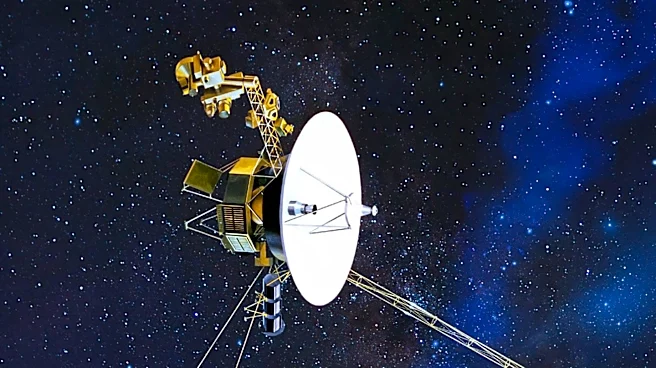
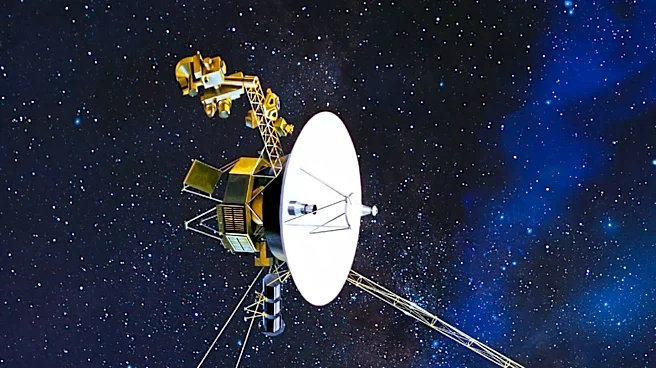
NASA has successfully extended the operational life of the Voyager 2 spacecraft by implementing a power management strategy known as the 'Big Bang' maneuver. This process involved turning off certain devices
and replacing them with less energy-intensive alternatives, while ensuring the spacecraft remains warm enough to avoid freezing. Voyager 2, along with its twin Voyager 1, has been in space for nearly 49 years, traveling further than any other human-made objects. The spacecraft are powered by radioisotope thermoelectric generators (RTGs) that use decaying plutonium-238, which lose about four watts of power annually. By strategically shutting down nonessential equipment, NASA has managed to conserve enough power to extend Voyager 2's mission by an additional year.
Why It's Important?
The continued operation of Voyager 2 allows scientists to gather more data from the far reaches of space, providing valuable insights into the interstellar environment. The spacecraft's longevity and the data it collects contribute to our understanding of the solar system's boundary and the conditions of interstellar space. This extension also demonstrates NASA's ability to innovate and adapt to challenges, maximizing the scientific return from long-term missions.
What's Next?
NASA plans to apply a similar power management strategy to Voyager 1, which is even further from Earth. If successful, this could extend the operational life of both spacecraft into the 2030s, allowing them to continue transmitting data back to Earth. Voyager 1 is expected to reach a significant milestone later this year, traveling a distance equivalent to one light-day from Earth.