


What's Happening?
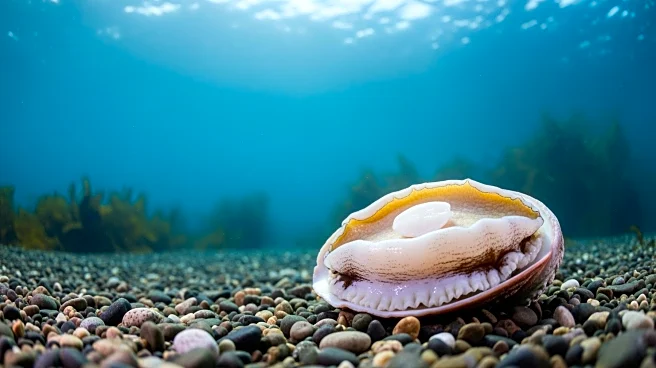
The Bodega Bay lab, part of the UC Davis Bodega Marine Laboratory, is actively working to save the endangered white abalone, a marine snail known for its iridescent shell and delicate meat. The lab's program director, Alyssa Frederick, oversees the breeding
efforts aimed at increasing the population of this species, which was once abundant along the California coast. The lab has successfully released over 20,000 white abalones into the ocean since its inception in 2011. However, the program faced a significant threat when President Trump proposed a $1.7 billion cut to the National Oceanic and Atmospheric Administration (NOAA), which funds the lab. Despite this, anonymous donors and subsequent federal funding have temporarily secured the program's future.
Why It's Important?
The white abalone is the first marine invertebrate to be listed as an endangered species, and its survival is crucial for maintaining biodiversity in marine ecosystems. The lab's efforts are vital in reversing the damage caused by overfishing and habitat loss. The potential extinction of the white abalone would not only impact marine biodiversity but also affect cultural and historical aspects, as the species has been a part of California's heritage. The program's success could serve as a model for other conservation efforts, highlighting the importance of sustained funding and support for environmental protection initiatives.
What's Next?
The lab aims to continue its breeding and release efforts, with hopes of increasing the white abalone population to sustainable levels. The program's future, however, remains uncertain due to potential funding cuts and the volatile political climate. The lab is exploring alternative funding sources to ensure its continuity. Additionally, efforts to restore kelp forests, which are crucial habitats for the abalone, are ongoing. The success of these initiatives will depend on continued support from both public and private sectors.
Beyond the Headlines
The challenges faced by the white abalone highlight broader issues of environmental conservation and the impact of political decisions on scientific research. The lab's work underscores the need for a stable funding environment to support long-term conservation projects. It also raises questions about the role of private funding in public conservation efforts and the ethical implications of relying on non-governmental sources for critical environmental initiatives.