
What's Happening?
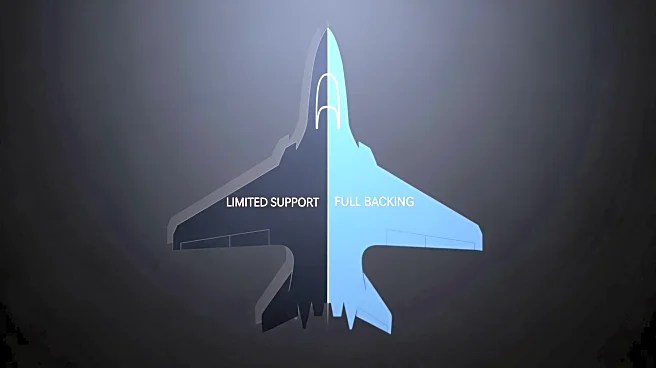
Congress is moving forward with a defense policy bill that provides limited funding for the Navy's F/A-XX program while fully supporting the Air Force's F-47 fighter development. The bill, which is nearing
a vote in the House of Representatives, reflects a strategic decision to prioritize certain military programs over others. The F/A-XX program, which is crucial for the Navy's future air superiority, is receiving only a fraction of the necessary funding. In contrast, the Air Force's F-47 fighter, which is seen as a critical component of the U.S. military's future capabilities, is receiving full backing. This decision comes amidst broader discussions about the U.S. military's strategic priorities and budget allocations.
Why It's Important?
The allocation of defense funding has significant implications for U.S. military capabilities and strategic priorities. By fully supporting the Air Force's F-47 fighter, Congress is signaling a commitment to maintaining air superiority and advancing technological capabilities in aerial combat. However, the limited funding for the Navy's F/A-XX program raises concerns about the future readiness and modernization of naval air forces. This decision could impact the Navy's ability to project power and maintain a competitive edge in maritime operations. The funding choices reflect broader debates about resource allocation within the U.S. military and the need to balance immediate operational needs with long-term strategic goals.
What's Next?
As the defense policy bill moves towards a vote, stakeholders within the military and government will likely continue to advocate for their respective programs. The Navy may seek additional funding or adjustments in future budget cycles to ensure the F/A-XX program can meet its objectives. Meanwhile, the Air Force will proceed with the development of the F-47 fighter, potentially accelerating its timeline to deployment. The outcomes of these funding decisions will influence future military planning and could prompt further discussions about the U.S. military's strategic priorities and the balance between different branches' needs.