


What's Happening?
Two recent federal lawsuits have brought attention to issues of free speech and government censorship in the United States. The cases involve a North Carolina high school student and a retired police officer from Tennessee. The student faced retaliation
from her school for painting a spirit rock in honor of conservative activist Charlie Kirk, who was assassinated in September 2025. The school later revised its policies to ban religious and political messages. Meanwhile, the retired officer was jailed for 37 days after posting a meme related to Kirk's assassination, which was interpreted as a threat. Both individuals are suing for violations of their First Amendment rights, with support from legal organizations advocating for free speech.
Why It's Important?
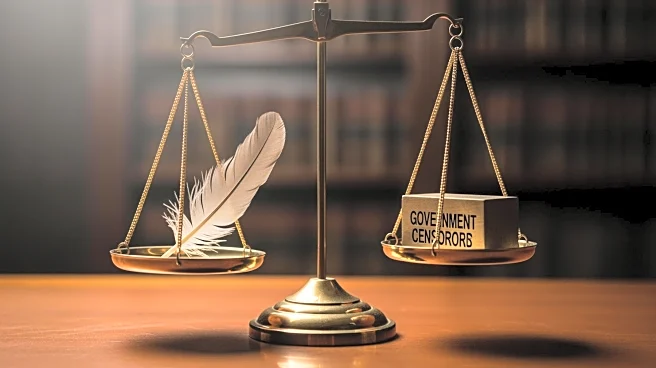
These cases underscore the ongoing debate over free speech rights in the U.S., particularly in educational and public settings. The lawsuits highlight the tension between individual expression and institutional policies, raising questions about the limits of government authority in regulating speech. The outcomes of these cases could set important precedents for how free speech is protected and interpreted, impacting schools, law enforcement, and public discourse. They also reflect broader societal divisions over political and religious expression, with potential implications for policy and legal standards.
What's Next?
The lawsuits will proceed through the federal court system, where judges will evaluate the claims of constitutional rights violations. The decisions could influence future policies on speech in schools and public forums. Legal experts and civil rights organizations will likely monitor these cases closely, as they could affect broader interpretations of the First Amendment. Public reactions and media coverage may also shape the discourse around free speech and government censorship, potentially prompting legislative or policy changes.