
What's Happening?
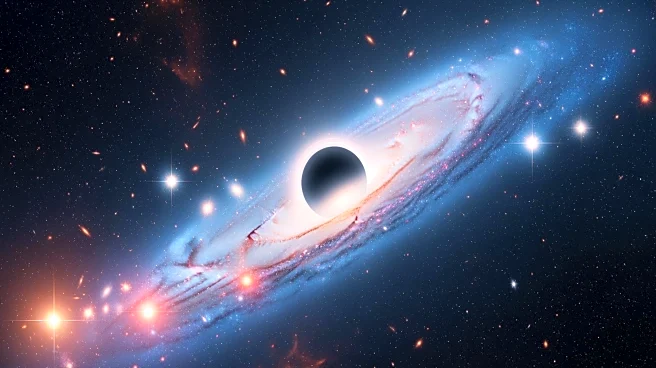
The James Webb Space Telescope (JWST) has helped solve the mystery of a galaxy, known as GS-10578 or 'Pablo's Galaxy,' which was found to have been slowly starved of its star-forming gas by a supermassive
black hole. The galaxy, which formed most of its stars between 11.5 and 12.5 billion years ago, was observed to have lost its cold gas, essential for star formation, due to the black hole's influence. The study, published in Nature Astronomy, reveals that the black hole expelled neutral gas at high speeds, depleting the galaxy's star-forming material over a relatively short period.
Why It's Important?
This discovery provides significant insights into the processes that can halt star formation in galaxies, contributing to our understanding of galaxy evolution. The findings challenge previous models that suggested galaxies are torn apart by black holes, instead showing a more gradual depletion of star-forming gas. Understanding these mechanisms is crucial for explaining why some galaxies stop forming stars earlier than expected, which has implications for the study of galaxy formation and the role of black holes in shaping the universe.
What's Next?
Further observations and studies using the JWST and other telescopes will aim to explore similar galaxies to determine how common this starvation process is. Researchers will continue to refine models of galaxy evolution, incorporating these new findings to better understand the lifecycle of galaxies. The study also opens up new avenues for investigating the interplay between black holes and their host galaxies, potentially leading to new discoveries about the early universe.