


What's Happening?
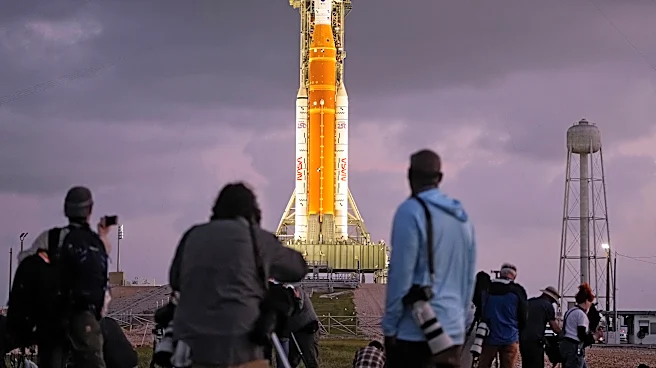
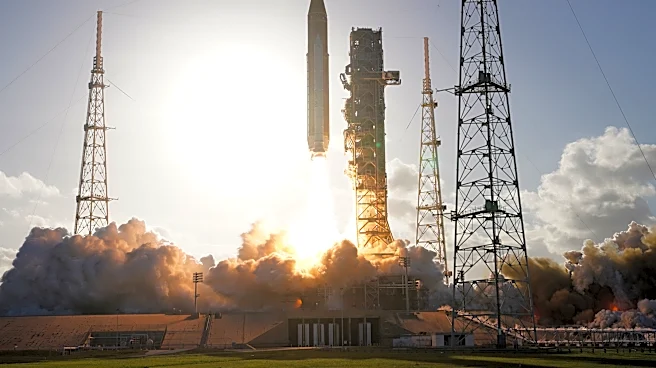
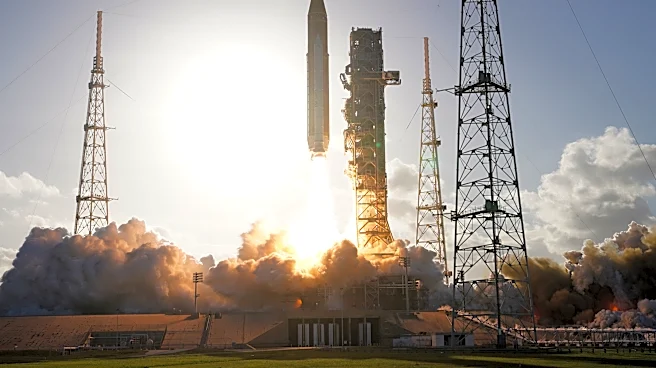
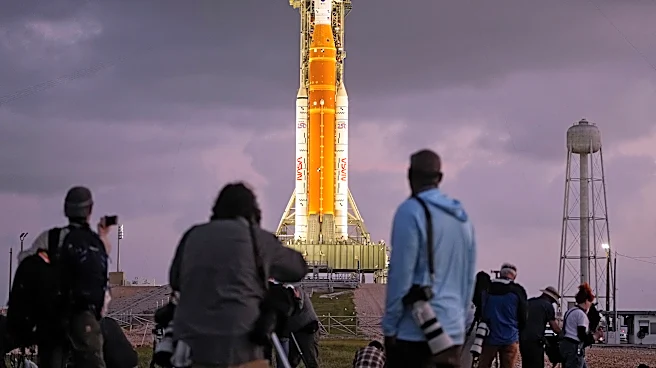
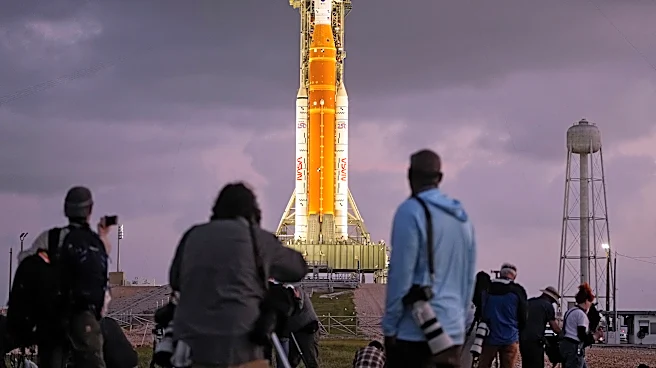
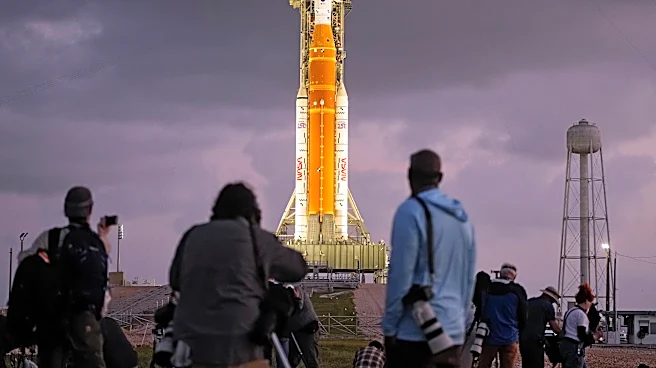
NASA has released a series of striking images of Earth captured by the Artemis II mission, which is currently on a historic journey around the moon. The mission, which includes three American astronauts and one Canadian, aims to travel farther from Earth than
any human has before. The images, reminiscent of the iconic 'blue marble' photo from the Apollo 17 mission in 1972, show Earth in vivid detail from tens of thousands of miles away. The photos include views from the Orion capsule, where the astronauts reside, showcasing Earth 'lit up in spectacular blues and browns' with a 'green aurora' lighting up the atmosphere. This mission is a critical test for future plans to establish a moon base and eventually send crewed expeditions to Mars.
Why It's Important?
The Artemis II mission is a significant step in NASA's long-term goals of lunar exploration and potential Mars expeditions. By testing systems and hardware on this mission, NASA is preparing for future missions that aim to establish a sustainable human presence on the moon. This mission also marks several historic firsts, including the first Black man, the first woman, and the first Canadian to travel within the vicinity of the moon. The success of Artemis II could pave the way for more ambitious space exploration projects, potentially leading to new scientific discoveries and advancements in space technology.
What's Next?
As Artemis II continues its journey, the mission is expected to reach the moon and perform a historic flyby. The astronauts will travel farther from Earth than any humans have before, surpassing the record set by Apollo 13. After completing the lunar flyby, the crew will embark on a four-day journey back to Earth, utilizing the planet's gravity to assist in their return. The mission is scheduled to conclude with a water landing in the Pacific Ocean near California. The success of this mission will be crucial for the planning and execution of future Artemis missions, including the establishment of a lunar base.