





What's Happening?
U.S. Senator John Fetterman (D-PA) has announced $20.5 million in federal funding for various communities across Pennsylvania. These funds, provided through the U.S. Department of Transportation’s Fiscal Year 2026 Safe Streets and Roads for All (SS4A)
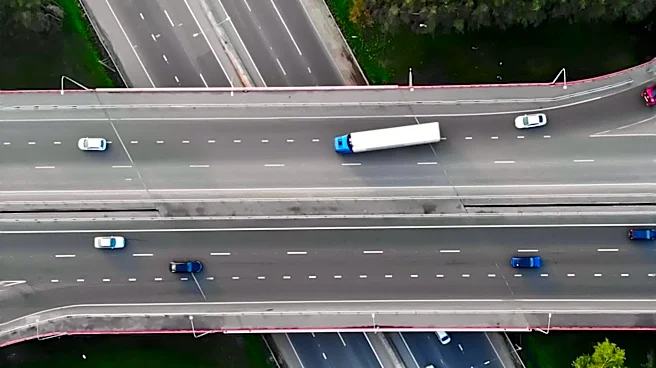
Grant Program, are designated for planning and construction projects aimed at enhancing roadway safety and reducing fatalities. Among the beneficiaries, Westmoreland County will receive $4.75 million for its 'Beyond the Crash: Coordinating Care, Response, and Safety in Golden Hour' project. This initiative will develop a countywide post-crash care coordination system, including responder training, data-sharing protocols, and survivability evaluations. The Municipality of Monroeville is set to receive $3.34 million for the Forbes Hospital Access Improvements Project, which will reconfigure a five-leg intersection to reduce severe crashes and improve access to Forbes Hospital through critical safety upgrades like a direct access roadway, additional turn lanes, pedestrian crossings, and traffic signal enhancements. Senator Fetterman actively advocated for both projects, sending letters of support to Secretary Duffy.
Why It's Important?
This significant federal investment underscores a commitment to improving public safety and infrastructure within Pennsylvania, directly impacting the daily lives of residents. The funding for Westmoreland County's 'Golden Hour' initiative is crucial for developing advanced post-crash care systems, which could lead to faster and more effective responses to severe roadway incidents, ultimately saving lives and reducing long-term injuries. For Monroeville, the intersection improvements near Forbes Hospital are vital for enhancing access to emergency medical care, which is critical in time-sensitive situations. These projects also stimulate local economies through construction and development, creating jobs and improving the overall quality of life. By addressing specific high-risk areas and implementing comprehensive safety measures, the grants aim to mitigate the economic and social costs associated with traffic accidents, such as healthcare expenses, lost productivity, and emotional distress for affected families.
What's Next?
The awarded funds will now move into the implementation phase, with Westmoreland County and Monroeville initiating their respective projects. Westmoreland County will proceed with developing and evaluating its Golden Hour Initiative, including the creation of training curricula and data-sharing protocols, with future updates to its Comprehensive Safety Action Plan informed by these efforts. Monroeville will begin the construction phase of reconfiguring the intersection near Forbes Hospital, which will involve significant infrastructure work to install new roadways, pedestrian crossings, and traffic signal enhancements. The success of these projects could serve as models for other communities facing similar roadway safety challenges, potentially influencing future federal grant allocations and transportation safety policies. Continued oversight and evaluation will be essential to ensure the effective use of these funds and the achievement of their intended safety outcomes.
Beyond the Headlines
The allocation of these federal grants highlights a broader national focus on Vision Zero initiatives, aiming to eliminate traffic fatalities and severe injuries. Beyond the immediate safety improvements, these projects represent an investment in community resilience and public health infrastructure. The 'Golden Hour' project in Westmoreland County, for instance, not only addresses immediate post-crash care but also fosters inter-agency coordination and technological integration, setting a precedent for how communities can proactively manage emergency responses. The Forbes Hospital access improvements in Monroeville underscore the critical link between transportation infrastructure and healthcare accessibility, particularly in urban and suburban areas where traffic congestion can impede emergency services. These initiatives reflect a growing understanding that roadway safety is a multifaceted issue requiring integrated solutions that combine engineering, education, enforcement, and emergency response, ultimately contributing to more livable and sustainable communities.