





What's Happening?
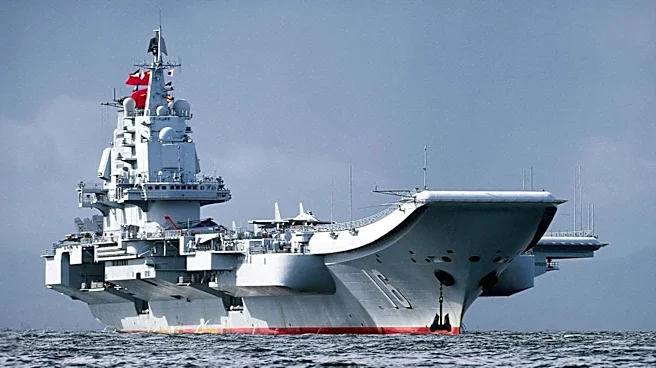
On October 30, the Chinese military announced a significant advancement in its naval capabilities: the successful launch and recovery of an unmanned combat aerial vehicle (UCAV) from its drone carrier, the Sichuan. This event marks the first time a drone carrier has
launched a UCAV using a catapult and subsequently recovered it. The Sichuan, a Type 076 (NATO reporting name: Yulan) amphibious assault ship, is the first of its kind to be equipped with an electromagnetic catapult and arresting gear, technology previously reserved for China's newest aircraft carrier, the Fujian. The GJ-21 reconnaissance and strike stealth drone, weighing over 10 tons, was launched from the carrier, demonstrating the Sichuan's ability to handle heavier drones that cannot take off from a short flight deck without a catapult. This test is part of China's ongoing efforts to integrate autonomous systems into its maritime forces, positioning Beijing at the forefront of developing drone carriers as combat platforms.
Why It's Important?
This development is highly significant for the U.S. and global naval strategy. China's lead in developing dedicated drone carriers could provide it with a substantial advantage in future naval conflicts, particularly in a Pacific contingency. Drone swarms, launched from these carriers, could map, mislead, and jam adversary defenses, then strike, posing a significant challenge to Taiwanese and U.S. forces. As noted by a Center for Strategic and International Studies (CSIS) report, these dispersed swarms could force adversaries to expend expensive interceptors on cheaper unmanned systems, exposing their sensors and creating confusion. Drones can also act as decoys, diverting attention from traditional assets like fighter aircraft and naval strike groups. This technological leap signals China's growing comfort with autonomous systems and provides a new tool for coercion in peacetime and mass in conflict, potentially altering the balance of power in critical maritime regions like the South China Sea.
What's Next?
While the operational effectiveness of drone carriers in combat remains to be fully proven, China is expected to continue testing and refining this technology. The Chinese military's focus on 'intelligentized warfare' and autonomous systems, as emphasized by President Xi Jinping, suggests a sustained investment in this area. The U.S., while also advancing in autonomous systems, has primarily focused on integrating unmanned systems into existing platforms rather than building dedicated drone carriers. The Pentagon's plan to establish the Autonomous Warfare Command (AutoWARCOM) indicates a recognition of the growing importance of AI and autonomous systems in military operations. This divergence in approach could lead to different strategic advantages for each nation. China's ability to build both hulls and drones at lower cost and greater speed than competitors further fuels its naval buildup and allows for continued experimentation with platforms like the Sichuan.
Beyond the Headlines
The rise of drone carriers and autonomous warfare introduces complex ethical and legal questions regarding the future of combat. The increasing reliance on AI and unmanned systems could lead to faster, more automated decision-making in warfare, potentially reducing human oversight and increasing the risk of unintended escalation. The concept of 'intelligentized warfare' also raises concerns about data security and the potential for cyberattacks to compromise autonomous systems. Furthermore, the cost-effectiveness of drones compared to manned aircraft could lower the barrier to entry for certain types of military actions, potentially leading to more frequent or prolonged conflicts. The long-term implications include a fundamental shift in naval doctrine, the development of new international regulations for autonomous weapons, and a global re-evaluation of military spending and technological priorities as nations adapt to this evolving landscape.