
What's Happening?
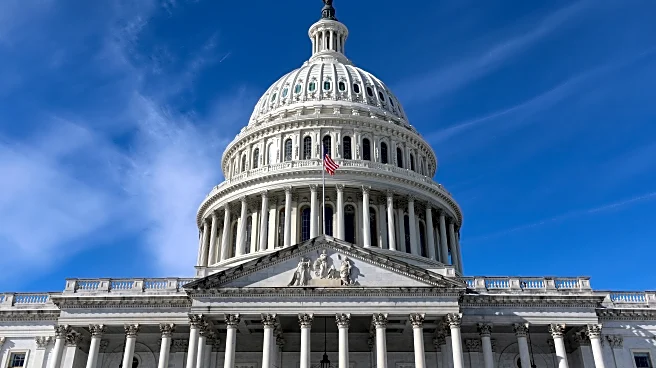
The U.S. House of Representatives has passed a $1 trillion spending package, effectively ending the partial government shutdown. The legislation, signed by President Trump, funds major government departments
through September, including the Pentagon and the Department of Health and Human Services. A temporary extension for the Department of Homeland Security funding is included, allowing time for negotiations on ICE policies. These discussions are prompted by recent incidents involving federal agents and aim to address issues such as the use of body cameras and judicial warrants for enforcement actions.
Why It's Important?
The resolution of the government shutdown and the subsequent focus on ICE policy reforms highlight ongoing debates about immigration enforcement and government accountability. The spending package averts deep budget cuts proposed by the Trump administration, maintaining funding for critical agencies like the CDC. The negotiations on ICE policies could lead to significant changes in immigration enforcement practices, impacting communities across the U.S. The outcome will also reflect broader political priorities and could influence future legislative agendas.
What's Next?
In the coming days, Congress will engage in detailed negotiations to address ICE policy reforms. The discussions will involve balancing security concerns with civil liberties, and the outcome could lead to legislative changes or new guidelines for ICE operations. The temporary funding extension for the Department of Homeland Security sets a deadline for these negotiations, adding urgency to the discussions. Stakeholders, including lawmakers, advocacy groups, and law enforcement agencies, will play a crucial role in shaping the final outcome.