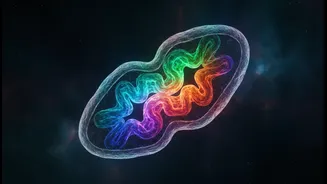

Our Cellular Power Plants
At the heart of this discovery are mitochondria, often called the 'powerhouses' of the cell. Found in nearly every cell in our bodies, these tiny structures are responsible for converting the food we eat into adenosine triphosphate (ATP), the chemical
energy that fuels everything from muscle contraction to brain function. Think of them as microscopic batteries, powering all of life’s essential processes. When these powerhouses function correctly, our bodies operate smoothly. But when they falter, a system-wide energy crisis can occur, leading to a host of health issues.
The Biological Toll of Spaceflight
It’s long been known that space is tough on the human body. Without Earth's gravity, astronauts experience a range of health problems, including muscle atrophy, bone density loss, immune system dysfunction, and cardiovascular issues. For decades, scientists have studied these effects, often treating them as separate problems. However, a growing body of evidence now suggests a common thread may unite many of these seemingly disconnected ailments: mitochondrial stress. Data collected from dozens of astronauts, as well as experiments on mice, consistently point to changes in mitochondrial activity as a central biological response to the space environment.
An Energy Crisis in Zero-G
Research published in the journal Cell and supported by NASA's GeneLab project has shown that spaceflight disrupts mitochondrial function on a massive scale. The combination of microgravity and increased radiation exposure appears to damage these cellular power plants. This leads to what scientists call oxidative stress, an imbalance that can harm proteins, lipids, and DNA. This cellular breakdown is now believed to be a key driver behind many of the health risks of space travel. For example, mitochondrial dysfunction is linked to the kind of inflammation and immune system suppression seen in astronauts. It's also tied to the metabolic changes observed in the liver and the muscle weakness that plagues spacefarers.
Fueling the Future of Exploration
Identifying mitochondria as a central hub for space-related health issues is a major breakthrough. If scientists understand the root cause, they can begin to develop targeted countermeasures. Instead of treating muscle loss and immune problems separately, future solutions could focus on protecting and supporting mitochondrial health directly. Researchers are already exploring several promising avenues. One approach involves specific nutritional supplements and antioxidant compounds, like kaempferol (found in plants like kale and berries), which have been shown to protect against mitochondrial damage in simulated spaceflight conditions. Another futuristic concept being explored by NASA is 'mitochondria replacement therapy', which would involve transplanting healthy, pre-mission mitochondria back into an astronaut's cells to rejuvenate them after radiation exposure.