





What's Happening?
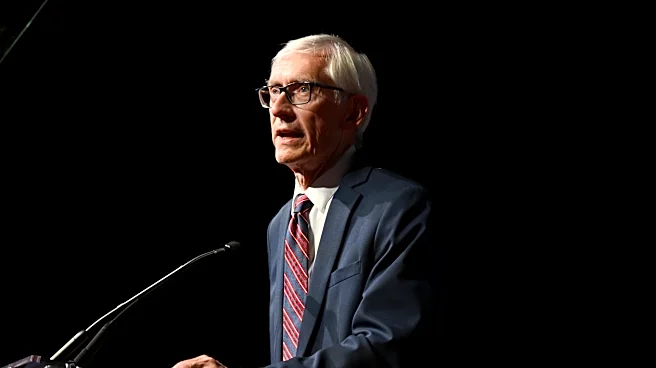
Wisconsin Governor Tony Evers has granted commutations to 14 individuals, marking the first time such actions have been taken by a Wisconsin governor since former Governor Tommy Thompson. This follows Governor Evers' reinstatement of the state's commutation process
earlier this year through two executive orders. Unlike a pardon, which restores civil rights after a sentence is completed, a commutation can reduce a sentence an individual is currently serving, potentially making them eligible for earlier supervised release or parole. The Governor's Commutation Advisory Board reviewed applicants, considering factors such as impact on victims, public safety, prison conduct, and personal growth. Among those granted commutations, Casey Fisher, who has served 32 years of a life sentence, had his parole eligibility date changed to 2039, recognizing his rehabilitation efforts and educational achievements while incarcerated.
Why It's Important?
Governor Evers' decision to grant commutations signifies a significant shift in Wisconsin's criminal justice system, emphasizing rehabilitation and second chances. This move could impact the lives of many incarcerated individuals by offering a pathway to reduced sentences or earlier parole eligibility, provided they demonstrate personal growth and a commitment to change. The re-establishment of the commutation process reflects a broader national conversation about criminal justice reform, focusing on the potential for redemption and reintegration into society. It also highlights the role of executive clemency in addressing cases where original sentences may be deemed excessive or where individuals have shown substantial rehabilitation over time. This action could serve as a model for other states considering similar reforms.
What's Next?
The 14 individuals who received commutations will now proceed according to the terms of their revised sentences. For those whose parole eligibility dates were changed, they will be considered by the Wisconsin Parole Commission at the specified time, which will evaluate their status and determine release. The Governor's Commutation Advisory Board will continue to review applications, and future commutations may be granted based on their recommendations. This process is expected to continue to evolve, with ongoing evaluations of its effectiveness and impact on both incarcerated individuals and public safety. The re-established commutation process will likely face continued scrutiny and discussion from various stakeholders, including victims' advocates, legal experts, and civil rights organizations.
Beyond the Headlines
The reintroduction of commutations in Wisconsin raises deeper questions about the purpose of incarceration—whether it is primarily for punishment, deterrence, or rehabilitation. By prioritizing personal growth and a commitment to change, Governor Evers' actions suggest a leaning towards rehabilitation as a core tenet of the justice system. This approach could lead to a re-evaluation of sentencing guidelines and the long-term impact of lengthy sentences, particularly for juvenile offenders. The involvement of organizations like the Wisconsin Innocence Project in supporting commutation applications also highlights ongoing efforts to address potential miscarriages of justice and ensure fairness within the legal system. This development could foster a more restorative justice environment, encouraging accountability and community reintegration.