





What's Happening?
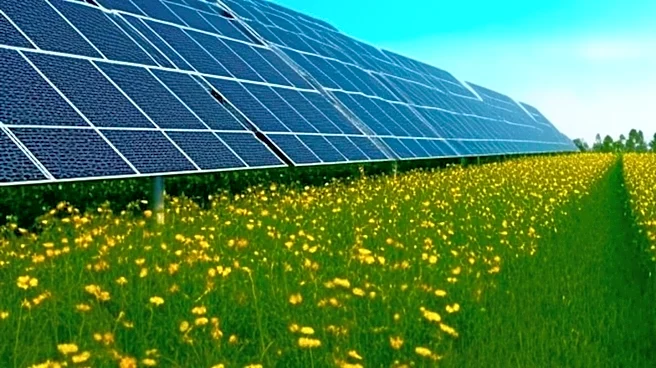
A farm in Massachusetts has implemented an innovative agrivoltaics project by installing 832 solar panels above its berry fields. This dual-purpose approach not only generates electricity but also provides shade to the crops below. The panels create a cooler
microclimate, which helps in retaining soil moisture more effectively. As a result, the berries grown under these conditions have been observed to be larger, juicier, and sweeter compared to those grown in full sunlight. This method presents a promising model for integrating renewable energy with agriculture, potentially offering a sustainable solution to climate challenges faced by the farming industry.
Why It's Important?
The integration of solar panels in agriculture, as demonstrated by this Massachusetts farm, represents a significant step towards sustainable farming practices. By combining energy production with crop cultivation, farms can reduce their carbon footprint while enhancing crop quality. This approach not only addresses the need for renewable energy but also offers a viable solution to the challenges posed by climate change, such as extreme weather conditions and water scarcity. The success of this project could encourage other farms across the U.S. to adopt similar practices, potentially transforming the agricultural landscape and contributing to national energy goals.
What's Next?
If this model proves successful on a larger scale, it could lead to widespread adoption of agrivoltaics across the United States. This would involve collaboration between farmers, energy companies, and policymakers to develop supportive infrastructure and regulatory frameworks. Additionally, further research could be conducted to optimize the design and placement of solar panels for different types of crops and climates. The potential for increased crop yields and energy savings could drive investment in this area, leading to advancements in both agricultural and renewable energy technologies.
Beyond the Headlines
The adoption of agrivoltaics could have broader implications beyond immediate agricultural benefits. It may influence land use policies, encouraging more efficient use of available space by combining energy and food production. This approach could also foster community engagement and education about sustainable practices, as local stakeholders witness the tangible benefits of renewable energy integration. Moreover, it could inspire innovation in other sectors, such as urban farming and vertical agriculture, where space and resources are limited.