



What's Happening?
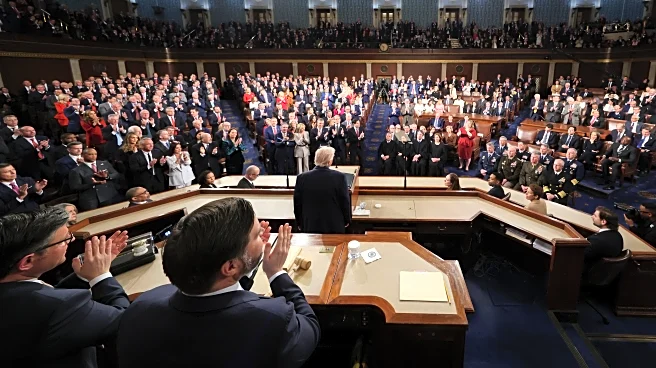
President Donald Trump is scheduled to deliver his State of the Union address, where he will highlight his administration's accomplishments and present his agenda for the upcoming year. This annual address provides the President with an opportunity to communicate
directly with Congress and the American public, outlining his priorities and legislative goals. The address is expected to cover a range of topics, including economic policies, national security, and healthcare reforms. President Trump is likely to emphasize the successes of his administration, such as economic growth and job creation, while also addressing ongoing challenges and proposing new initiatives.
Why It's Important?
The State of the Union address is a significant event in U.S. politics, as it sets the tone for the administration's policy direction and legislative priorities. It provides insight into the President's vision and can influence public opinion and congressional action. For lawmakers, the address serves as a guide for upcoming legislative sessions, potentially impacting decisions on key issues such as budget allocations and policy reforms. The address also offers the President a platform to rally support from both the public and political allies, which can be crucial for advancing his agenda in a divided political landscape.
What's Next?
Following the State of the Union address, political analysts and commentators will likely dissect the President's proposals and rhetoric, assessing their feasibility and potential impact. Congress will begin deliberations on the legislative agenda outlined by the President, with debates and negotiations expected on key issues. Public and media reactions will also play a role in shaping the political discourse, influencing how the administration and lawmakers prioritize and address the proposed initiatives. The address may also prompt responses from political opponents, who could offer alternative visions and critiques of the President's plans.