



What's Happening?
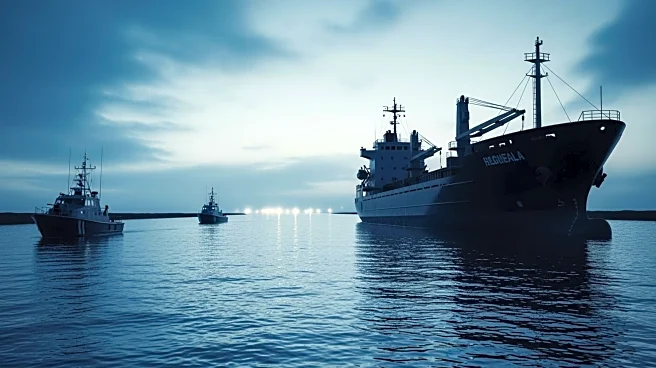
A group of armed boats attempted to intercept a vessel 16 nautical miles north of Oman in the Strait of Hormuz, according to the United Kingdom Maritime Trade Operations (UKMTO). The incident occurred in the inbound Traffic Separation Scheme of the strait,
a critical maritime passage linking the Persian Gulf to the Gulf of Oman and the Arabian Sea. The armed vessels tried to contact the ship via VHF radio, but the vessel ignored the requests and continued on its route. Iran's semi-official Fars news agency reported that the vessel had entered Iranian territorial waters without the necessary permits, was warned, and subsequently left the area without any security incidents. The Strait of Hormuz is a vital route for oil exports from OPEC members, including Saudi Arabia, Iran, and the United Arab Emirates.
Why It's Important?
The Strait of Hormuz is a strategic chokepoint for global oil transportation, with a significant portion of the world's oil supply passing through it. Any disruption in this area can have substantial implications for global oil markets and energy security. The incident highlights ongoing tensions in the region, particularly between Iran and other countries, including the United States. Previous incidents have seen vessels seized by Iran, often in response to U.S. actions against Iranian interests. Such events can escalate into broader geopolitical conflicts, affecting international trade and diplomatic relations. The security of maritime routes is crucial for maintaining stable oil prices and ensuring the uninterrupted flow of energy resources.
What's Next?
The UKMTO is investigating the incident, and further diplomatic engagements may occur to address the security concerns in the Strait of Hormuz. Countries reliant on oil exports through this route may seek to enhance naval escorts or increase diplomatic efforts to ensure safe passage. The incident could lead to increased military presence in the region by countries with vested interests in maintaining open and secure shipping lanes. Additionally, international bodies may call for discussions to de-escalate tensions and establish protocols to prevent future incidents.