
What's Happening?
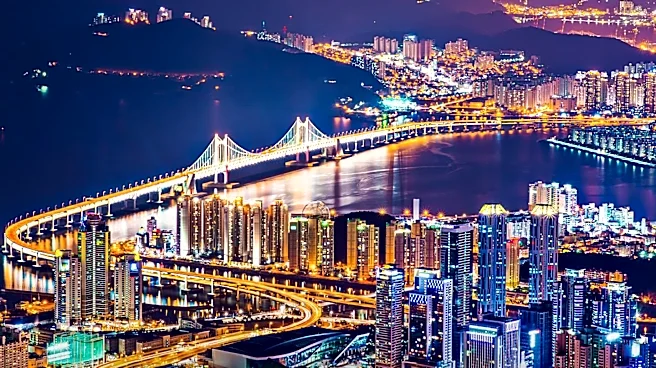
The city of Busan, South Korea, has formally announced its intention to host the 22nd general assembly of the International Association of Cities and Ports (AIVP) from November 2 to November 5, 2027, at BEXCO.
This event marks Busan as the first Asian host city for the assembly in 25 years. The city anticipates approximately 1,000 participants from 50 countries, including local governments, port authorities, experts, and corporate officials. During the recent 21st AIVP World Conference in Dunkirk, France, a Busan delegation promoted key projects such as the transshipment competitiveness of Busan Port, the North Port redevelopment, and infrastructure for supplying eco-friendly marine fuels. The city aims to use this assembly to showcase its port development and eco-friendly policies, building momentum towards the 4th U.N. Ocean Conference, which Busan is also slated to host in June 2028.
Why It's Important?
Busan's hosting of the AIVP assembly and the subsequent U.N. Ocean Conference highlights a growing international focus on sustainable port development and ocean conservation. For the U.S., this signifies an opportunity for collaboration on global maritime issues, particularly in areas of eco-friendly port technologies and marine environmental protection. U.S. businesses involved in shipping, logistics, and green technologies could find new markets and partnerships. The emphasis on 'green marine fuels' and 'North Port redevelopment' reflects a global shift towards sustainable practices in maritime industries, which could influence U.S. policy and investment in similar areas. Furthermore, the U.N. Ocean Conference in 2028 will be a critical platform for international agreements and initiatives that could impact U.S. coastal management, fishing industries, and environmental regulations.
What's Next?
Busan will begin firming up preparations for the 2027 AIVP assembly with an on-site inspection by the AIVP secretariat from December 1 to December 5. The city plans to ensure the port-city cooperation discussed at the assembly transitions smoothly into the 4th U.N. Ocean Conference in June 2028. This suggests a continuous effort to foster international collaboration on maritime and environmental issues. The U.S. and other nations will likely monitor these developments for potential partnerships and policy alignment, especially concerning sustainable ocean management and port operations. The outcomes of these conferences could shape future international maritime regulations and environmental protection strategies.
Beyond the Headlines
The selection of Busan as a host for these significant international maritime events underscores the increasing recognition of port cities as crucial hubs for both economic development and environmental stewardship. This trend reflects a broader global understanding that economic prosperity and ecological health are interconnected, particularly in coastal regions. The focus on eco-friendly marine fuels and sustainable port redevelopment points to a long-term shift in the maritime industry towards decarbonization and environmental responsibility. This could lead to new technological innovations, stricter international standards, and increased investment in green infrastructure, potentially influencing global supply chains and trade practices. The U.S., as a major maritime nation, will need to adapt to and potentially lead these evolving standards.