

What's Happening?
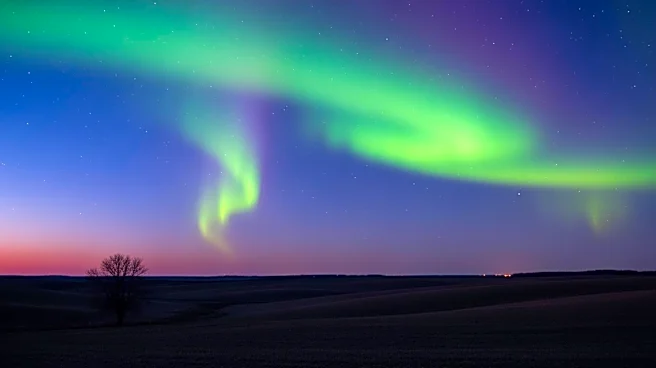
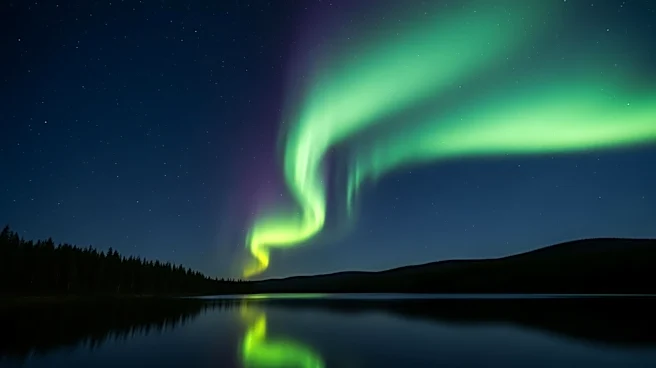
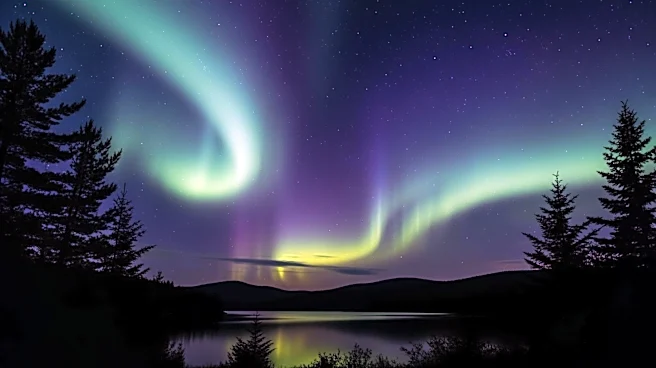
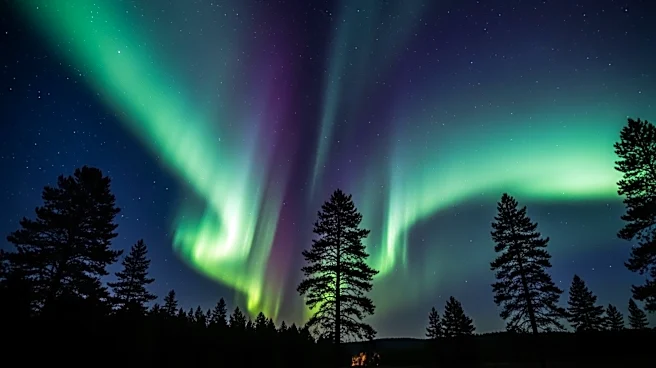
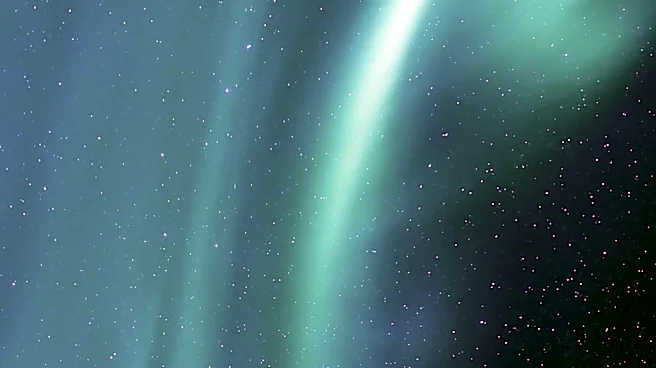
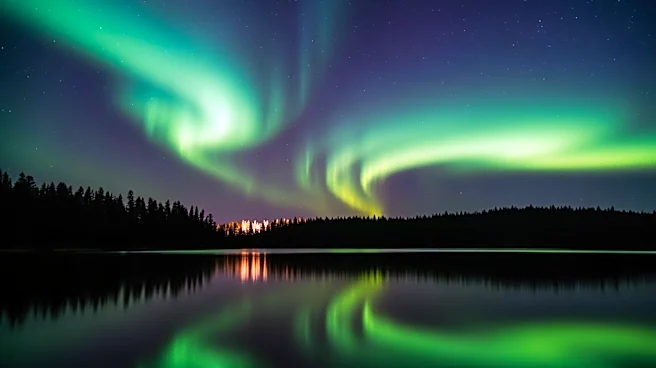
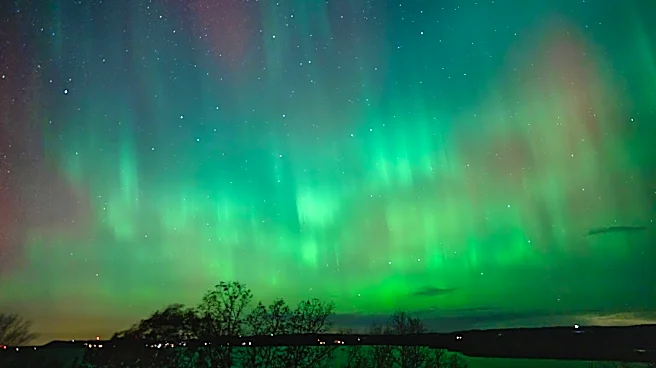
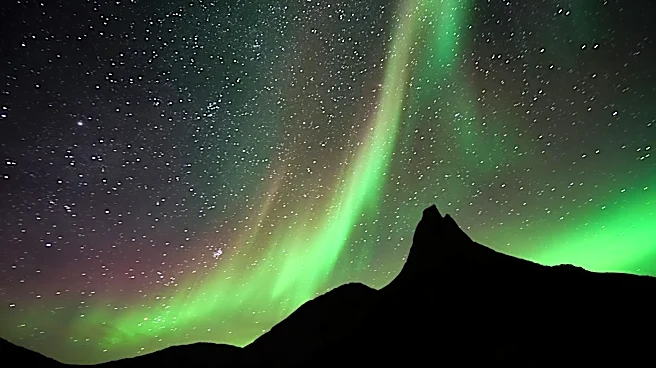
Residents of New England have the opportunity to witness the northern lights over the next two nights due to a strong G3 geomagnetic storm. The storm's K-index, a measure of geomagnetic activity, is expected to range from 5 to 7, allowing for potential
aurora visibility directly above northern New England and a faint glow on the southern horizon. The best viewing times are during total solar midnight, between 10 p.m. and 3 a.m. The forecast suggests favorable conditions for aurora viewing, though factors such as weather conditions and atmospheric disturbances like wildfire smoke or pollen clouds could affect visibility.
Why It's Important?
The visibility of the northern lights in New England is a rare and captivating event, drawing interest from both local residents and tourists. This natural phenomenon not only provides a stunning visual display but also serves as a reminder of the dynamic interactions between solar activity and Earth's magnetic field. For scientists, such events offer valuable data on geomagnetic storms and their potential impacts on technology and infrastructure. The public's interest in witnessing the aurora can also boost local tourism and community engagement in science and nature.
What's Next?
As the geomagnetic storm progresses, residents and visitors in New England are encouraged to find locations with minimal light pollution to maximize their chances of seeing the aurora. Weather conditions will play a crucial role in visibility, so staying updated with local forecasts is advisable. The storm's effects on technology and infrastructure will be monitored, with potential implications for satellite communications and power systems. The public is advised to use cameras to capture the aurora, as the colors may appear more vivid in photographs than to the naked eye.